How Hybrid Screens Protect Homes in Florida
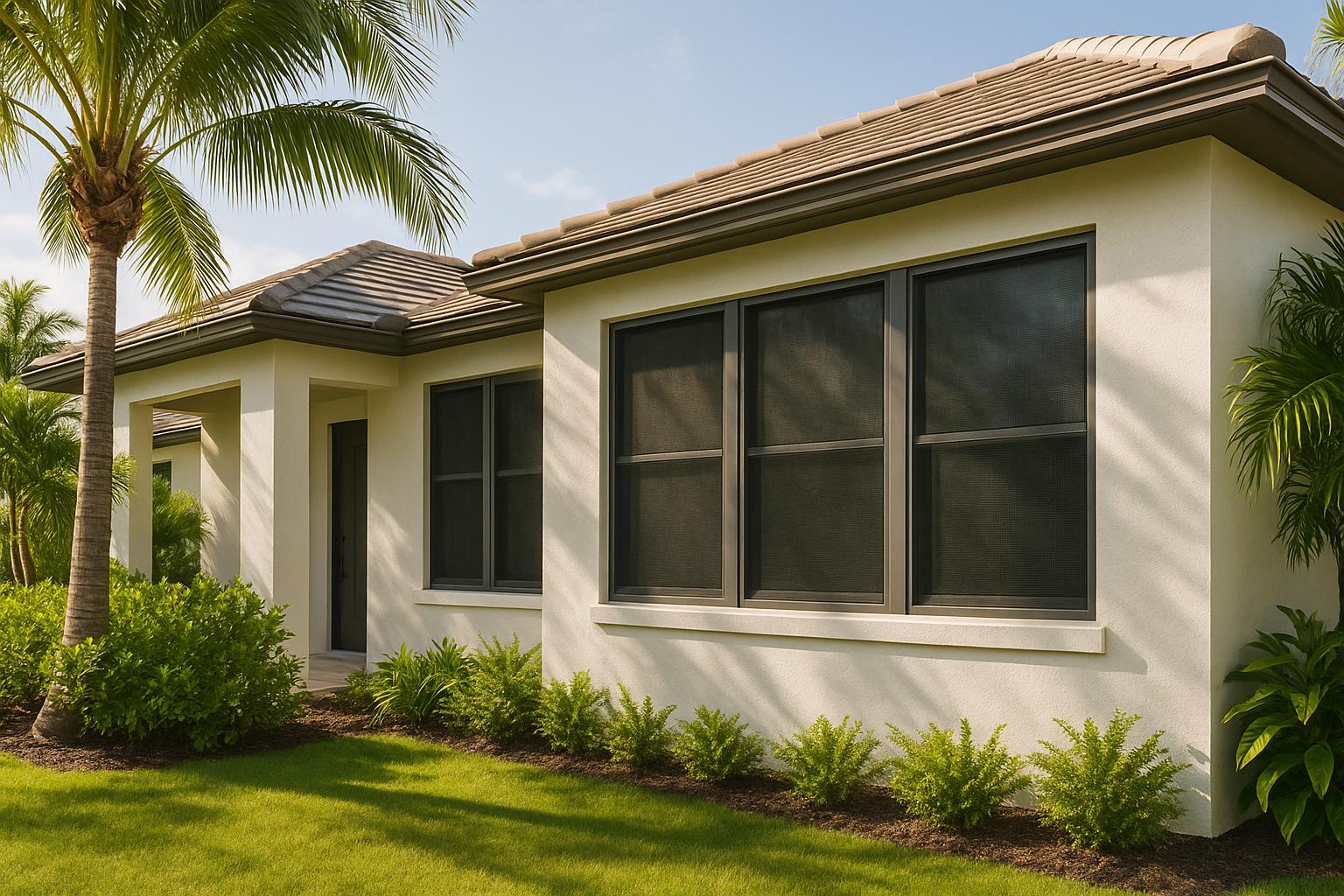
How Hybrid Screens Protect Homes in Florida
Hurricanes in Florida cause immense damage, especially to homes with large openings like lanais, patios, and pool enclosures. Hybrid screens offer a durable solution, shielding homes from wind, debris, and water intrusion while maintaining airflow and visibility.
- Florida’s Hurricane Risks: Winds over 156 mph and flying debris can shatter windows and damage interiors. Standard screens fail under these conditions.
- Why Hybrid Screens Work: Made from high-strength fabrics like resin-coated nylon, these screens withstand strong winds, debris impacts, and prevent dangerous internal pressurization.
- Key Features:
- Withstand debris impacts at 34–50+ mph.
- Handle wind forces up to +/-200 PSF.
- Block 97% of wind and rain while allowing 70–90% of light through.
- Retractable or custom-fitted options for large openings.
- Additional Benefits:
- UV protection reduces interior fading and cooling costs.
- May qualify for insurance discounts under Florida Building Code standards.
- Long-term savings through reduced energy bills and storm damage prevention.
Hybrid screens are a practical, durable way to protect Florida homes from storms while improving comfort and reducing costs.
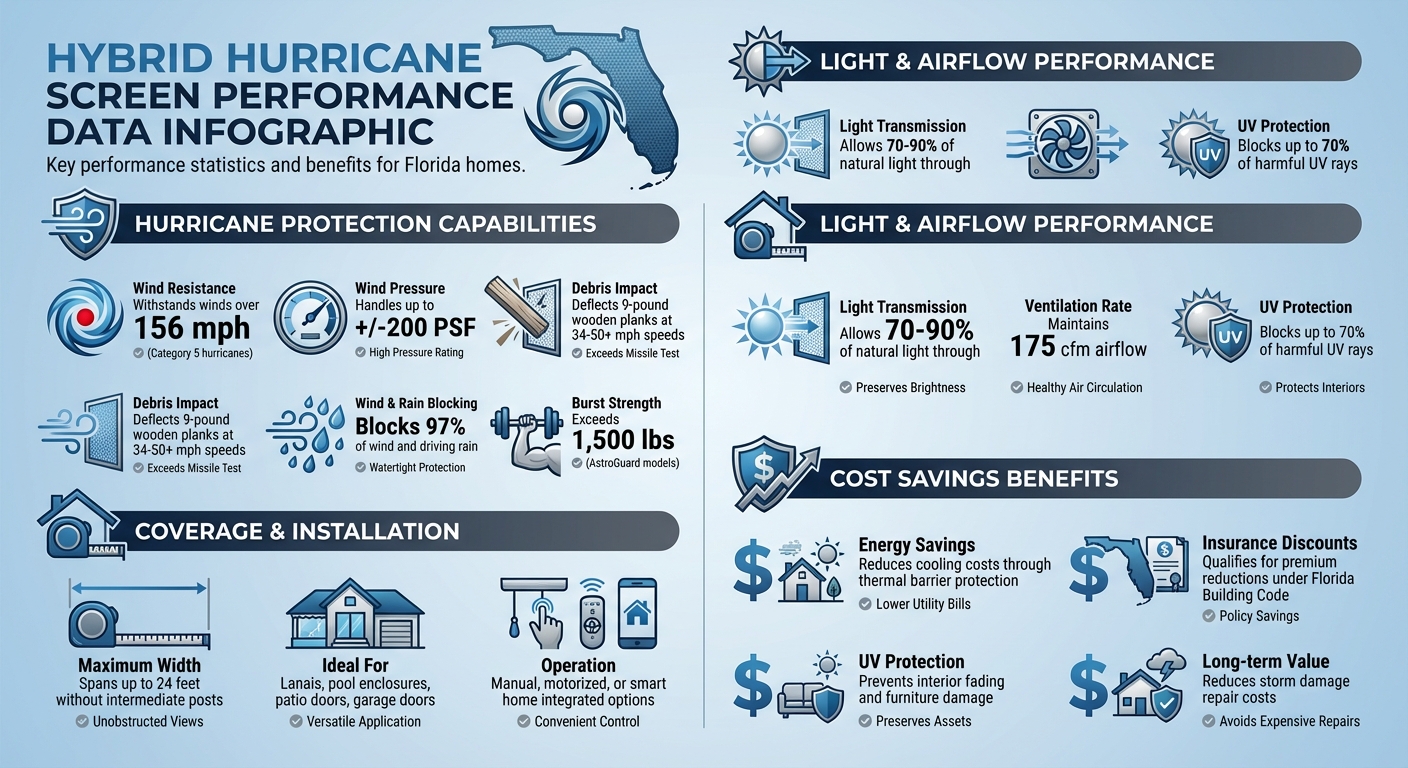
Hybrid Hurricane Screen Protection Statistics and Performance Data
Next-Gen Hurricane "Shutters" | Storm Catcher® Roll-Down Screens | WPTV Sunshine Spotlight
What Are Hybrid Screens?
Hybrid screens are designed to protect Florida homes from hurricane winds and flying debris, offering a level of durability that standard screens simply can't match. These screens are crafted using high-strength fabrics, such as resin-coated nylon or synthetic composites, that can endure extreme weather conditions. Unlike regular insect screens, hybrid screens combine tough protection with clear, unobstructed views. Let’s dive into their construction and standout features.
Materials and Construction
The secret to hybrid screens' resilience lies in their advanced materials. Most are made from reinforced nylon coated with UV-resistant resin, resulting in a fabric that’s not only lightweight but also incredibly strong. For instance, AstroGuard hybrid screens boast burst strengths exceeding 1,500 lbs. - almost double that of many competitors. Some models even incorporate aramid fibers, which provide extra resistance to missile impacts, meeting Level D standards as outlined by ASTM and TAS testing protocols.
These high-strength fabrics are woven into translucent panels and tailored to fit specific openings. To ensure durability and functionality, manufacturers pair the fabric with powder-coated aluminum frames and advanced track systems like the MagnaTrack magnetic system. This system can handle wind forces of up to +/-200 PSF without wrinkling, slipping, or jamming. Instead of shattering like rigid materials, these screens flex and absorb impact energy, making them a reliable choice for storm protection.
Main Features of Hybrid Screens
Hybrid screens are packed with features that make them a practical and effective solution for storm protection. They can cover large areas, making them ideal for lanais, pool enclosures, and patio doors. Despite their strength, these screens allow 70–90% of light to pass through and maintain a ventilation rate of 175 cfm, ensuring both brightness and airflow.
For added convenience, hybrid screens often come with retractable roll-down systems. These can be operated manually, motorized, or even integrated into smart home systems, allowing homeowners to deploy them quickly when a storm is on the way and retract them just as easily when the weather improves. They meet Florida Building Code and Miami-Dade standards, ensuring they comply with stringent hurricane requirements. This approval can also help homeowners qualify for insurance discounts.
How Hybrid Screens Protect Homes During Hurricanes
Wind Deflection and Debris Impact Resistance
When hurricane-force winds sweep through Florida, hybrid screens act as a tough yet flexible shield over vulnerable openings. These screens are designed to handle winds over 156 mph, meeting the demands of Category 5 hurricanes. Unlike rigid materials that can crack or break under pressure, the screens flex and distribute the force evenly across their fabric and frame system. This unique ability to absorb and spread energy prevents failure and enhances durability.
In tests conducted under ASTM E1886/E1996 standards, hybrid screens have proven their strength by deflecting 9-pound wooden planks hurled at speeds of 34–50+ mph - replicating the kind of debris hurricanes unleash. Upon impact, the screens stretch slightly, slowing the projectile and either stopping it outright or reducing its energy so it falls harmlessly to the ground. This energy-absorbing flexibility makes hybrid screens far superior to standard aluminum or fiberglass insect screens, which tear apart under similar conditions.
Advanced systems like the MagnaTrack Defender add even more resilience with magnetic dual-pull technology and self-adjusting tracks. These features allow the screens to handle design pressures up to +/-200 PSF without wrinkling or jamming. Plus, they block 97% of wind and driving rain, creating a strong barrier to protect key openings.
Beyond deflecting debris, these screens are crucial for maintaining the structural integrity of your home.
Preventing Dangerous Home Pressurization
Hybrid screens do more than just keep debris out - they also prevent wind from entering your home and causing dangerous internal pressure surges. If a window or door gives way during a hurricane, wind rushing inside can create a "ballooning" effect. This rapidly increases pressure inside the house, pushing outward on the roof and walls. Such internal pressurization significantly amplifies uplift forces and is a leading cause of roof failures during hurricanes in Florida.
sbb-itb-85e0110
Benefits of Hybrid Screens for Florida Homes
Hybrid screens do more than just shield against hurricanes - they also enhance everyday comfort and efficiency.
Natural Light and Airflow
These screens are designed to protect your home while allowing natural light and airflow to pass through, ensuring constant insect control and shade. Made from tightly woven, breathable high-tensile fabrics, they promote excellent air circulation, keeping outdoor spaces cooler and less humid without creating a closed-in feeling. During Florida's long summer months, you can leave the screens down for comfort and quickly retract them when a storm is on the horizon. The fabric also softens sunlight and reduces glare without obstructing your view, letting you enjoy open blinds and curtains more often. Many systems come motorized or permanently installed, giving you the flexibility to adjust them based on changing weather. These features not only protect but also improve the overall functionality of your home.
UV Protection and Lower Energy Costs
Hybrid screens go beyond comfort to also protect your home from environmental challenges. Many hurricane-grade screens are made with UV- and corrosion-resistant fabrics that block a large percentage of harmful ultraviolet rays while still allowing daylight through. Some systems, made with aramid fibers, provide up to 70% UV protection, helping to prevent sun damage to your interiors. Acting as an exterior thermal barrier, these screens stop radiant heat before it reaches your windows and walls. This helps keep your rooms cooler, reducing the need for air conditioning. By cutting down on energy use, particularly for south- and west-facing openings that get the most direct sunlight, these screens can lead to noticeable energy savings.
Insurance Discounts and Cost Savings
Installing hybrid screens can also save you money on insurance. Many Florida insurers offer discounts or mitigation credits for approved hurricane protection systems, including impact-rated screens that meet Florida Building Code standards. Products tested to ASTM and TAS impact and wind standards - and compliant with the Florida Building Code or Miami-Dade/International Building Code - often qualify for reduced premiums. These screens not only lower insurance costs but also help prevent expensive repairs by protecting windows and openings from storm damage, reducing the risk of water intrusion and interior damage. Additionally, they cut long-term costs by lowering energy bills and minimizing UV damage to furniture and flooring. Some manufacturers even highlight that hurricane screen systems can boost a home's value, as permanent, code-approved protection is a highly desirable feature in Florida’s hurricane-prone housing market. When factoring in insurance savings, avoided repair costs, and reduced energy expenses, the initial cost of hybrid screens can be significantly offset over time.
Installation Methods for Hybrid Screens
Hybrid screens can be installed using two main methods: retractable roll-down systems and custom-fitted panels for large openings. Each option offers unique features tailored to specific needs.
Retractable Roll-Down Systems
Retractable systems are designed to roll up into an aluminum housing when not in use and deploy along side tracks when a storm is imminent. These systems come in both manual and motorized options. Manual versions use crank handles or pull-down straps, while motorized systems - often compatible with smart home setups - offer quick deployment, even during power outages, provided they have a battery backup. Many motorized screens also include self-leveling bottom bars and durable side tracks to maintain proper alignment and tension, even in high winds.
Key components include:
- Aluminum housing: Protects the fabric from UV exposure and salt damage.
- Side tracks: Channel wind loads into the home’s structure for added stability.
- Self-leveling bottom bar: Ensures tight contact with uneven surfaces.
Proper anchoring is crucial for these systems to meet Florida Building Code requirements for design pressures and impact resistance. This involves securing the screens to concrete, masonry, or reinforced framing to ensure they can withstand extreme conditions.
For larger spaces requiring custom sizing, a different installation approach ensures comprehensive coverage.
Custom Fitting for Large Openings
Wide areas like lanais, patios, and garage doors can be protected with custom-fitted hybrid screens. These panels can span up to 24 feet in width without the need for intermediate posts. Installers take precise measurements to fabricate screens that account for track tolerances, header dimensions, and foundation conditions. This ensures proper tension and even load distribution, adhering to Florida Building Code standards.
- Smaller retractable screens are ideal for windows and doors, using low-profile housings and narrow tracks.
- Larger units are designed for garage doors and oversized sliders, anchored securely into structural elements like concrete block walls or reinforced wood framing.
For wood-framed installations, additional care ensures beams or headers can resist both uplift and lateral loads, providing the necessary structural integrity.
These custom installations can also align with broader exterior renovation projects, enhancing both protection and aesthetics. Contractors can integrate structural backing for tracks, conceal wiring for motorized units, and coordinate screen colors with updated exterior finishes. Full-service remodelers like Bayshore Exteriors specialize in managing these details, offering homeowners a seamless blend of functionality and style.
Conclusion
Hybrid screens offer reliable protection against Category 5 hurricanes while still allowing natural light and airflow into your home. Unlike solid shutters, these screens block up to 97% of wind and driving rain, all while maintaining ventilation and visibility - a balance that keeps your home safe without sacrificing comfort or brightness.
But storm defense is just the beginning. Hybrid screens come with long-term perks like UV protection, reduced cooling costs, insect control, and even potential savings on insurance premiums. Their compliance with Florida Building Code and Miami-Dade standards makes them a smart, forward-thinking investment for homeowners. Plus, their lightweight, retractable design and motorized systems with smart-home integration make deploying them quick and easy as storms approach.
These screens also enhance your home’s overall appearance. By coordinating installation with siding, trim, and other weather-resistant finishes, they provide both safety and style. Providers like Bayshore Exteriors go the extra mile, offering integrated backing for screen tracks, concealed wiring, and custom screen colors to seamlessly blend with your home’s aesthetic while boosting curb appeal.
FAQs
What makes hybrid screens a better option than traditional hurricane shutters for storm protection?
Hybrid screens are known for their durability and flexibility, making them a strong defense against hurricanes and harsh weather conditions. Unlike traditional hurricane shutters, which can be stiff and less accommodating, hybrid screens are crafted to absorb and spread out impact forces, offering better protection.
What sets hybrid screens apart is their ability to shield homes from debris while still allowing airflow and visibility. Their lightweight construction and user-friendly design make them an excellent option for homeowners looking to protect their properties in Florida’s storm-heavy seasons.
Can hybrid screens be designed to match my home's unique architecture?
Hybrid screens are designed to match the unique architectural details of your home. Whether you're dealing with custom-shaped windows, intricate patterns, or specific measurements, these screens can be adjusted to fit perfectly. This means they not only offer impact resistance and hurricane protection but also complement your home's overall look effortlessly.
How can hybrid screens help save money on energy bills and insurance in Florida?
Hybrid screens offer a practical way to cut energy expenses by improving insulation and reducing heat transfer. In Florida's hot and humid climate, these screens help maintain a cooler indoor temperature, which eases the strain on your air conditioning system. The result? Lower electricity bills and a more efficient home.
On top of that, their impact-resistant design adds an extra layer of hurricane protection. This feature could make you eligible for insurance discounts, as many providers reward homes equipped with storm-resistant upgrades. By combining safety and cost savings, hybrid screens prove to be a worthwhile investment for Florida homeowners.