James Hardie Siding vs. Vinyl: Carbon Footprint
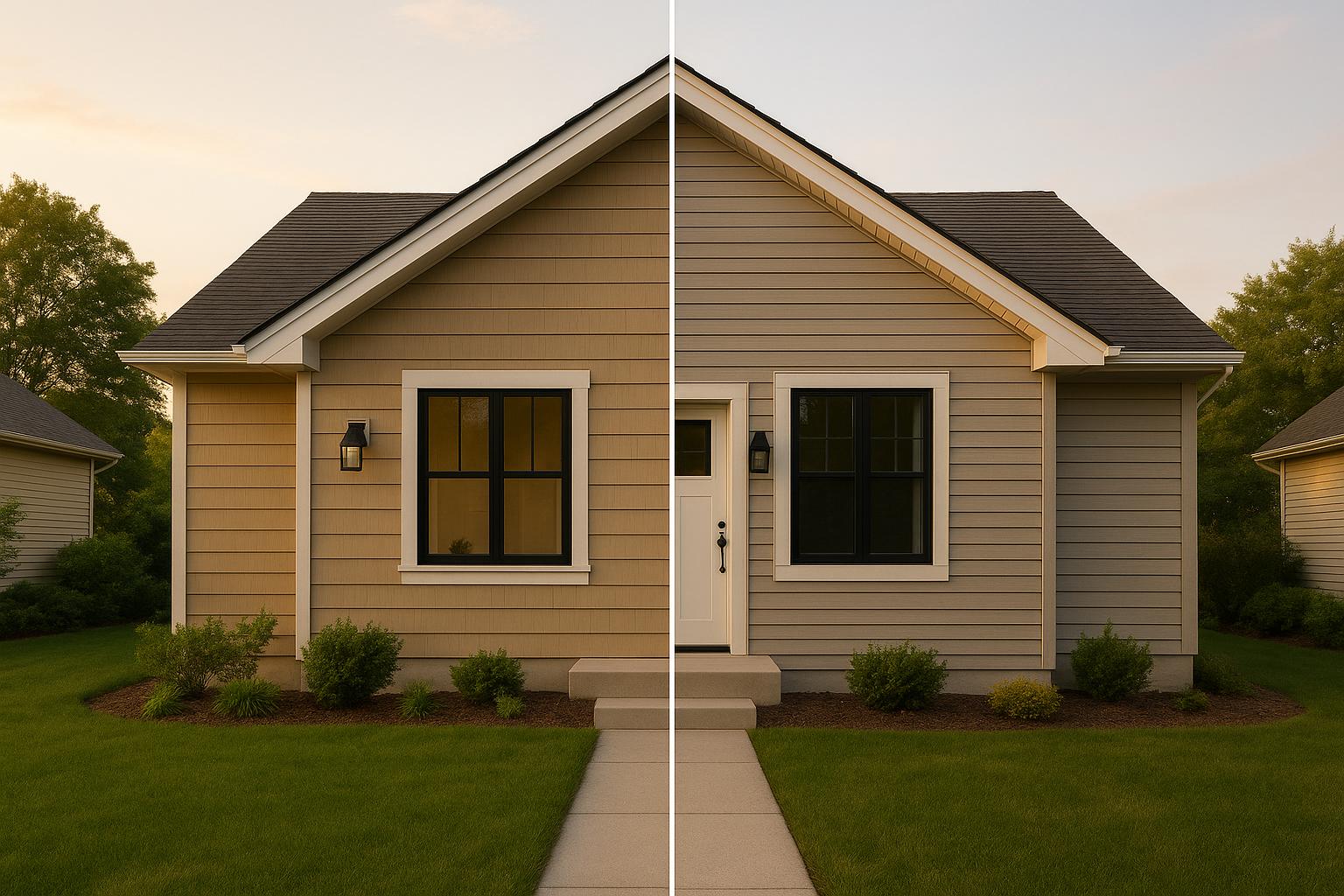
James Hardie Siding vs. Vinyl: Carbon Footprint
Want to reduce your home's carbon footprint with siding? Here's the short answer: James Hardie fiber cement siding has a smaller carbon footprint compared to vinyl siding.
-
James Hardie Fiber Cement Siding:
- Locally sourced materials (80%), reducing transport emissions.
- Absorbs CO₂ over its lifespan.
- Long lifespan (30–50+ years) with a 30-year warranty.
- Committed to reducing greenhouse gas emissions by 42% by 2030.
- Over 90% of products have third-party verified Environmental Product Declarations (EPDs).
- Zero landfill waste goal by 2035.
-
Vinyl Siding:
- Made from petroleum-based PVC, a high-energy process.
- Limited recycling options and releases harmful chemicals in landfills.
- Shorter lifespan (20–40 years).
- Lighter weight reduces shipping emissions slightly but doesn't offset production impact.
Quick Comparison
| Feature | James Hardie Fiber Cement | Vinyl Siding |
|---|---|---|
| Raw Materials | Cement, sand, cellulose (local) | Petroleum-based PVC |
| Carbon Absorption | Yes | No |
| Lifespan | 30–50+ years | 20–40 years |
| Recycling Options | Developing, limited | Minimal, often landfilled |
| Waste Goals | Zero landfill waste by 2035 | None reported |
| Transportation Impact | Higher due to weight | Lower, lighter material |
If you're looking for a siding option with a lower environmental impact, James Hardie fiber cement siding is the better choice. It combines durability, sustainability goals, and transparency in its lifecycle emissions.
Keep reading to explore the full lifecycle comparison, from material sourcing to disposal.
Fiber Cement Siding and Sustainability Can Be Compatible
Material Sources and Production
The impact of siding on the environment starts with the raw materials and production methods. These early stages play a big role in determining the carbon footprint of James Hardie fiber cement siding versus vinyl siding. By examining how these materials are sourced and made, we can better understand their overall environmental effects.
James Hardie Components: Cement, Sand, Cellulose

James Hardie siding is made from cement, sand, and cellulose fibers, with most of these materials sourced within the United States. To cut down on transportation emissions, their manufacturing plants are located close to these raw material sources. This mix of cement binder, reinforcing sand, and cellulose fibers not only ensures durability but also keeps shipping-related emissions in check.
The company has taken steps to address the high energy demands of cement production. For instance, they recycle water during the manufacturing process and aim to eliminate landfill waste entirely by 2035. On top of that, fiber cement siding has the added benefit of acting as a carbon sink, absorbing CO₂ from the atmosphere over its lifetime.
Vinyl Components: PVC Production
Vinyl siding, on the other hand, is made from PVC, a type of plastic derived from petroleum or natural gas. Producing PVC involves several energy-heavy steps, including extracting fossil fuels, synthesizing vinyl chloride monomer, and polymerizing it. These processes not only consume significant energy but also release greenhouse gases and potentially harmful byproducts.
While James Hardie provides detailed environmental reports, vinyl siding manufacturers often lack transparency when it comes to sharing data about their environmental impact.
| Production Aspect | James Hardie Fiber Cement | Vinyl (PVC) Siding |
|---|---|---|
| Raw Materials | Locally sourced cement, sand, cellulose | Petroleum-based PVC, chemical additives |
| Supply Chain | US-based material sourcing | Global supply chain with longer transport distances |
| Carbon Impact | Can absorb CO₂ over its lifecycle | Ongoing carbon emissions |
| Waste Reduction Goals | Zero landfill waste by 2035 | Varies by manufacturer |
Manufacturing Energy Costs
When it comes to manufacturing energy use, the processes behind these siding options play a significant role in shaping their overall carbon footprints.
James Hardie Production Methods
James Hardie has taken notable steps to minimize its environmental impact by adopting advanced manufacturing techniques. For instance, the company implements cutting-edge water recycling systems and provides Environmental Product Declarations (EPDs) for over 90% of its products by revenue. Beyond these measures, James Hardie actively collaborates with universities and researchers to find ways to reduce the environmental impact of its fiber cement siding. This commitment earned them recognition as a 2024 Eco-Leader by Green Builder Media.
A unique feature of their fiber cement siding is its ability to absorb and retain carbon emissions throughout its lifespan.
"James Hardie is proactively managing their environmental impact with a focus on circularity and reducing greenhouse gas emissions", states their 2023 sustainability report.
Vinyl Production Methods
Vinyl siding, on the other hand, is manufactured through a process heavily reliant on petroleum, which is inherently energy-intensive. Each stage of production, from raw material processing to the final extrusion, requires significant energy input:
| Production Stage | Energy Impact |
|---|---|
| Raw Material Processing | High energy consumption for refining petroleum |
| Chemical Synthesis | Intensive power needed to create vinyl chloride monomer |
| Polymerization | Substantial energy for forming PVC |
| Extrusion | Additional energy for shaping and finishing |
Although some vinyl manufacturers have worked to improve efficiency, the production of PVC remains an energy-heavy process. Unlike James Hardie, vinyl manufacturers generally provide less detailed reporting on energy consumption, making it harder to fully assess their environmental footprint.
These manufacturing energy demands carry over into the shipping and installation phases, where factors such as material weight and setup methods further affect total emissions.
Shipping and Setup
Transport Costs by Weight
The weight difference between James Hardie fiber cement and vinyl siding plays a big role in transportation-related carbon emissions. Fiber cement siding weighs around 2.5–3 pounds per square foot, whereas vinyl siding is much lighter at 1–1.5 pounds per square foot. This means fiber cement siding requires 40–60% more fuel for shipping due to its heavier weight. To balance out the extra emissions, James Hardie strategically places its facilities to reduce transportation distances. Once the materials arrive, the installation process also contributes to the overall carbon footprint.
Setup Methods
The installation process for fiber cement and vinyl siding varies in terms of tools, labor, and waste management:
| Installation Aspect | James Hardie Fiber Cement | Vinyl Siding |
|---|---|---|
| Equipment Requirements | Needs specialized cutting tools and handling equipment | Basic tools suffice |
| Labor Intensity | Higher due to the heavier material | Easier to handle because of lightweight design |
| Waste Management | Aims to achieve zero waste by 2035 | Limited recycling options for scraps |
| Installation Precision | Skilled installation required for best results | Simpler interlocking design for easier setup |
James Hardie tracks the lifecycle impacts of its products, including the energy and waste generated during installation, through Environmental Product Declarations (EPDs). These EPDs cover over 90% of their revenue-generating products. The company also works with universities and researchers to find ways to make the installation process more efficient. While the initial setup of fiber cement siding demands more energy because of its weight and the need for specialized tools, the precision of the installation helps reduce waste and lowers emissions over time.
sbb-itb-85e0110
Disposal Impact
Recycling Options
When siding materials reach the end of their life, proper recycling and disposal are crucial. James Hardie has introduced waste takeback programs that recover trim cuttings and disassembled products, recycling them into new boards. In Europe, some of their models even achieve negative cradle-to-gate CO₂ emissions.
| Recycling Aspect | James Hardie Fiber Cement | Vinyl Siding |
|---|---|---|
| Material Properties | Inert composite material requiring specialized processing | Technically recyclable PVC, though often contaminated |
| Programs | Limited post-consumer recycling in the U.S.; successful European models | Few take-back programs; minimal municipal recycling |
| Processing | Needs specialized equipment for material breakdown | Uses standard PVC recycling equipment but faces contamination issues |
| Infrastructure | Recycling capacity is developing, with a focus on manufacturing waste | Limited collection networks for widespread recycling |
These recycling efforts play a significant role in reducing the environmental footprint of siding disposal.
Waste Effects
The long-term effects of disposing of siding materials differ greatly between fiber cement and vinyl siding. Fiber cement siding is chemically stable in landfills and doesn't release toxins. Furthermore, James Hardie has set a goal of sending zero manufacturing waste to landfills by 2035.
Vinyl siding, on the other hand, is made from PVC, which can persist for hundreds of years. Under high heat, it can release harmful toxins like phthalates and dioxins.
To reduce the environmental impact of siding disposal, homeowners can take these practical steps:
- Choose Sustainable Materials: Opt for siding products tied to established recycling or take-back programs.
- Plan for Waste Reduction: Work with contractors who emphasize waste reduction and proper disposal. Companies like Bayshore Exteriors (https://bayshoreexteriors.com) offer tailored consulting for sustainable renovations.
- Separate Materials: Keep siding materials separate from other construction debris to avoid contamination and make recycling easier.
- Use Local Resources: Check with local waste management agencies or recycling facilities to confirm which types of siding they accept.
James Hardie's commitment to reducing environmental impact across the product lifecycle, including a focus on circularity, illustrates a more sustainable approach to siding disposal, though challenges in post-consumer recycling remain.
Total Carbon Output Results
Full Lifecycle Emissions
Third-party Environmental Product Declarations (EPDs) highlight clear differences in the carbon footprints of James Hardie fiber cement and vinyl siding. These lifecycle assessments evaluate emissions at every stage - from raw material extraction to final disposal. Building on earlier insights into production and installation, these assessments provide a more complete picture of their environmental impacts.
James Hardie fiber cement stands out for its focus on reducing lifecycle emissions. This is achieved through local sourcing, efficient manufacturing processes, natural carbon absorption, and ambitious zero-waste initiatives. The table below summarizes key lifecycle metrics for both materials.
Results Table
Here’s a comparison of key carbon footprint metrics based on lifecycle assessments:
| Performance Metric | James Hardie Fiber Cement | Vinyl Siding |
|---|---|---|
| Raw Material Sourcing | Over 80% locally sourced | Global supply chain (petroleum-based) |
| Manufacturing Energy | Moderate with efficiency improvements | High energy intensity (PVC production) |
| Product Lifespan | 30–50+ years | 20–40 years |
| Carbon Absorption | Active CO₂ absorption during service life | No carbon absorption |
| End-of-Life Impact | Inert in landfills; increasing recycling options | Limited recycling; potential toxin release |
| Transportation Emissions | Optimized locally | Lower per unit but longer transport distances |
| Annual Carbon Impact | Lower due to durability and CO₂ absorption | Higher due to shorter lifespan and no offset |
A 2023 SGS study further validated James Hardie's reduced environmental impact through an in-depth lifecycle analysis. Notably, the longer lifespan of James Hardie siding - often exceeding 50 years compared to vinyl siding's 20–40 years - spreads out manufacturing and installation emissions over more years of use. This durability significantly lowers its overall carbon footprint.
Conclusion
Lifecycle assessments reveal that James Hardie fiber cement siding has a smaller carbon footprint compared to vinyl siding. This advantage comes from environmentally conscious practices across its entire lifecycle - spanning material sourcing, manufacturing, and disposal.
Several factors contribute to this reduced impact. Local sourcing helps cut down on transportation emissions, the product’s long lifespan minimizes the need for replacements, and it even absorbs atmospheric CO₂ during its service life. Additionally, James Hardie has pledged to reduce greenhouse gas emissions by 42% by 2030 (compared to 2021 levels) and aims to eliminate manufacturing waste by 2035. Together, these efforts significantly reduce the overall emissions associated with the product.
"When considering the full lifecycle - including material sourcing, manufacturing, transportation, installation, durability, and disposal - James Hardie fiber cement siding consistently demonstrates a lower carbon footprint and greater sustainability than vinyl siding, making it a responsible choice for environmentally conscious homeowners".
Proper installation by professionals, such as Bayshore Exteriors, ensures the siding’s long-term durability and performance, enhancing its environmental benefits. With transparent third-party Environmental Product Declarations (EPDs) covering over 90% of its products, homeowners can feel confident in choosing a siding option that aligns with their sustainability goals. This lifecycle approach underscores why James Hardie siding is a thoughtful, eco-friendly option for today’s homes.
FAQs
Does James Hardie fiber cement siding help reduce CO₂ emissions, and how does this affect its carbon footprint compared to vinyl siding?
James Hardie fiber cement siding stands out for its ability to absorb a small amount of CO₂ throughout its lifecycle. This is due to its cement-based makeup, which helps reduce its overall carbon footprint. In comparison, vinyl siding, made from petroleum-based materials, often has a greater environmental impact due to its production process.
If you're deciding on siding for your home, factoring in the carbon footprint can lead to a more sustainable choice. For expert advice and professional installation, Bayshore Exteriors provides services designed to enhance your home's appearance and durability while keeping quality and sustainability in focus.
How does the carbon footprint of James Hardie fiber cement siding compare to vinyl siding throughout their lifecycle?
The environmental impact of James Hardie fiber cement siding and vinyl siding varies greatly due to differences in materials, manufacturing, and end-of-life processes.
James Hardie fiber cement siding tends to have a higher initial carbon footprint because its production is energy-intensive. That said, its exceptional durability and long lifespan can balance out this impact over time, making it a solid choice for homeowners who value long-term performance and reduced replacement needs.
In contrast, vinyl siding has a lower production-related carbon footprint since it requires less energy to manufacture. However, it’s made from petroleum-based materials, which are non-renewable. Plus, its shorter lifespan and limited recycling options can lead to greater environmental challenges down the road.
When deciding between these two, think about what matters most to you - whether it’s durability, ease of maintenance, or reducing your home's overall environmental impact.
How does the durability of James Hardie siding help reduce its carbon footprint over time?
James Hardie fiber cement siding is built to endure for decades, often lasting over 30 years with proper care. Its long lifespan means homeowners can avoid frequent replacements, cutting down on the environmental impacts tied to production, transportation, and installation that come with more short-lived siding options.
What sets James Hardie siding apart is its composition. Made from a mix of cement, sand, and cellulose fibers, it uses materials that are both durable and eco-conscious. Opting for a siding option like this not only ensures longevity but also supports a more environmentally mindful choice for your home.