Mesh vs. Screen Gutter Guards in Wet Climates
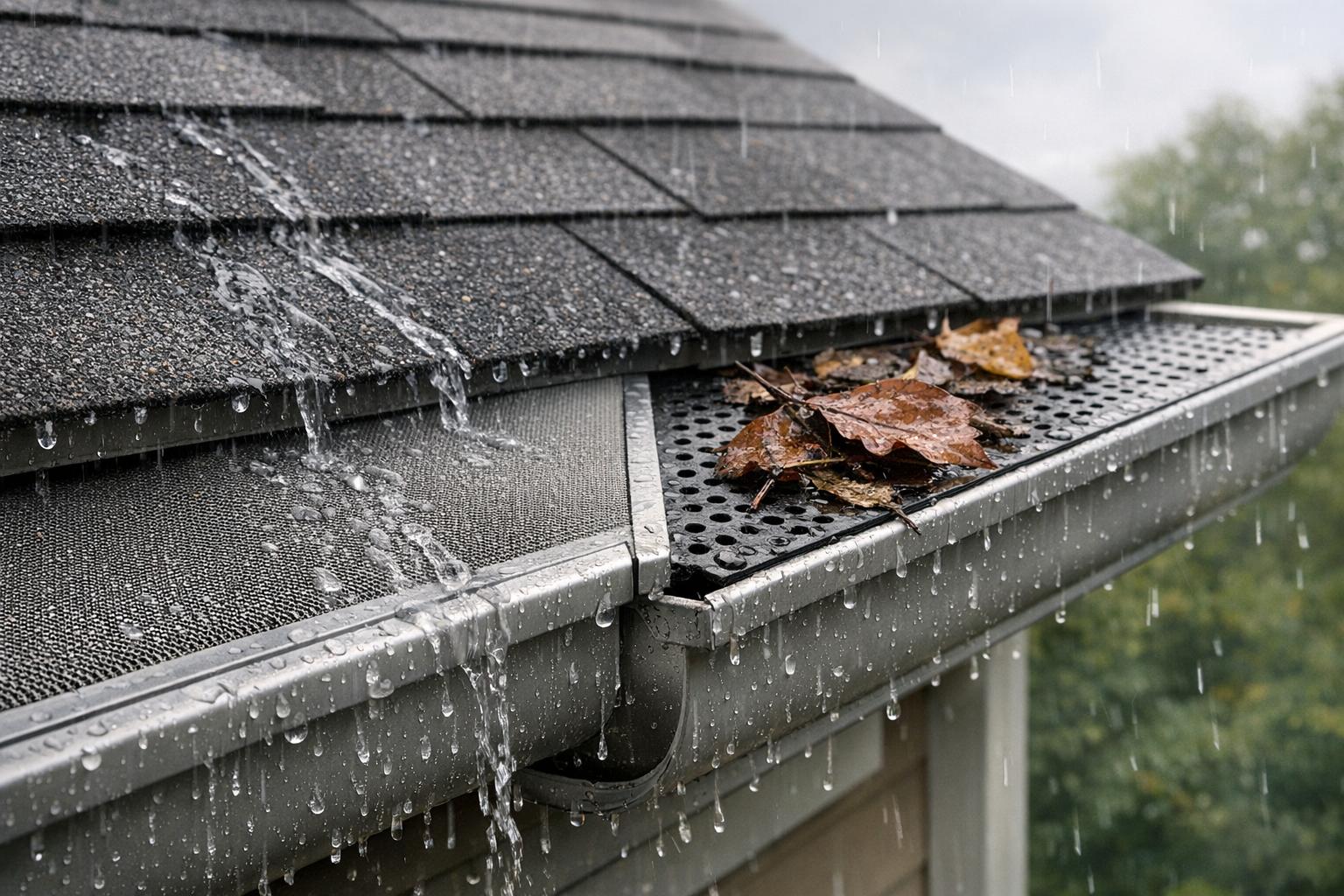
Mesh vs. Screen Gutter Guards in Wet Climates
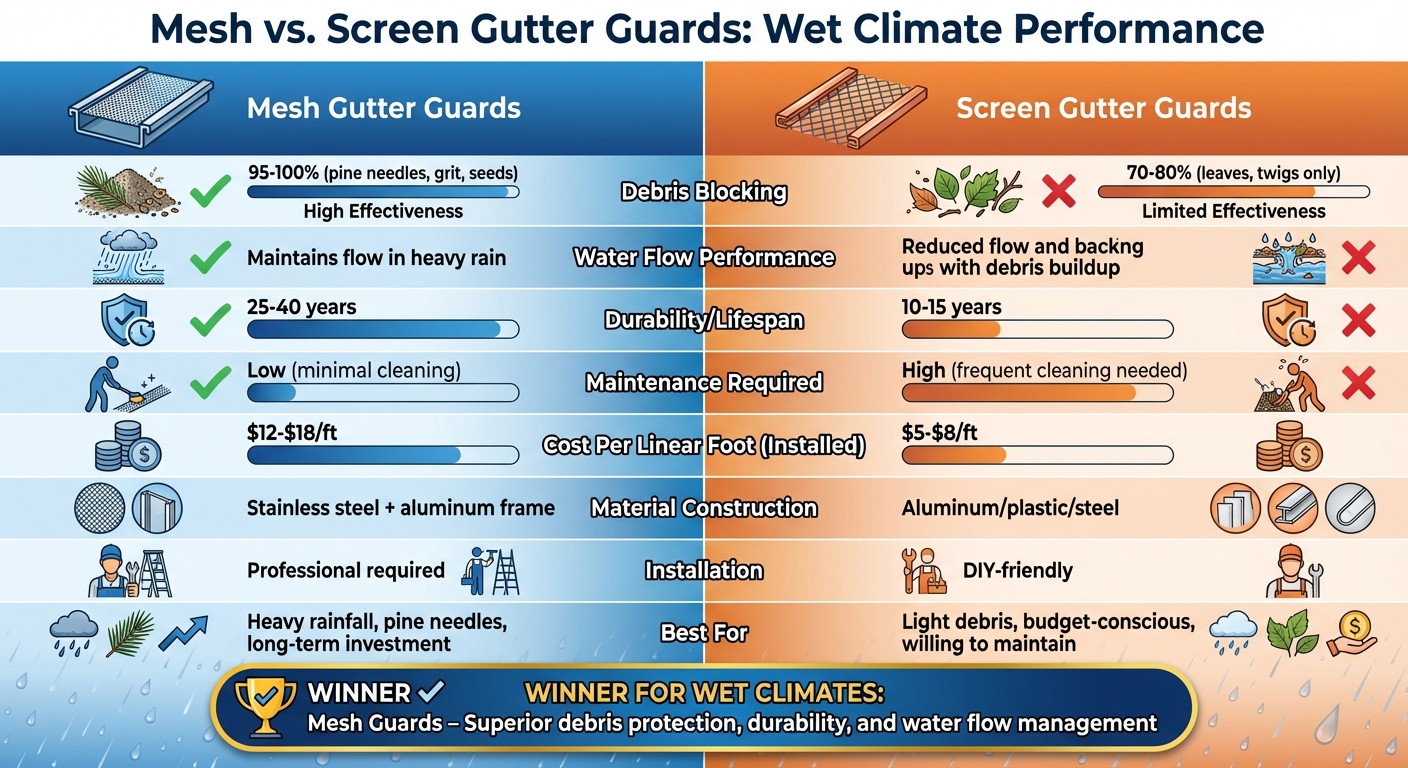
Mesh gutter guards outperform screen guards in wet climates. If you live in a rainy or humid area, mesh guards provide better debris filtration, longer durability, and reduced maintenance. Screen guards are cheaper upfront and easier to install but require frequent cleaning and replacement.
Key Insights:
- Mesh Guards: Block 95–100% of debris, including fine particles like pine needles. Built with stainless steel and aluminum for 25–40 years of durability. Cost: $12–$18/ft (installed).
- Screen Guards: Block 70–80% of debris, effective for larger leaves but struggle with smaller debris. Last 10–15 years and cost $5–$8/ft (installed). DIY-friendly but require frequent upkeep.
Quick Comparison:
| Feature | Mesh Guards | Screen Guards |
|---|---|---|
| Debris Blocking | 95–100% (pine needles, grit) | 70–80% (leaves, twigs) |
| Water Flow | Maintains flow in heavy rain | Reduced flow with debris |
| Durability | 25–40 years | 10–15 years |
| Maintenance | Low | High |
| Cost (Installed) | $12–$18/ft | $5–$8/ft |
Mesh guards are the better long-term investment for homes in wet climates, especially with heavy rainfall or fine debris like pine needles. Screen guards are suitable for light tree coverage and budget-conscious homeowners willing to clean regularly.
Mesh vs Screen Gutter Guards Comparison for Wet Climates
Which Gutter Guards Performed Best During Torrential Rains? [2025: EP 9]
What Are Mesh Gutter Guards?
Mesh gutter guards, often referred to as micro-mesh systems, are a highly effective solution for keeping your gutters clean and functional. Picture them as a coffee filter, but for your gutters. These guards feature an ultra-fine stainless steel mesh supported by a sturdy aluminum frame. The mesh openings are incredibly small - ranging from 50 to 150 microns (0.05-0.15 mm) - which means they can block tiny debris like pine needles, shingle granules, seeds, and even roof grit, all while letting water flow through effortlessly.
Here’s how they work: When rain hits the mesh, surface tension pulls water through the microscopic openings into the gutters. At the same time, debris stays on top of the guard. During heavy rainfall (1–3+ inches per hour), the raised design encourages water to sheet across the surface, preventing the overflow issues common with unprotected gutters. This design ensures smooth water flow and reduces the risk of clogs, making it especially useful in regions with frequent rain.
The mesh itself is typically made from surgical-grade 316L stainless steel, which resists rust and corrosion, even in very wet environments. The aluminum frame is anodized and extruded for added strength, ensuring the guard holds up over time.
Key Features of Mesh Gutter Guards
The thoughtful engineering behind mesh gutter guards delivers impressive performance benefits. One standout feature is their ultra-fine filtration. These guards can block 95-100% of debris, including pine needles, pollen, and roof granules, ensuring that your gutters stay clear even during heavy downpours.
Another critical aspect is the construction. The aluminum frame keeps the mesh taut and properly angled, preventing water from pooling on the surface. Professional installation is essential to ensure the guards are pitched correctly and securely sealed. This not only guarantees peak performance but also protects your warranty.
In areas with high rainfall, mesh guards excel at maintaining strong water flow, even if debris collects on top. Unlike other systems where debris can get trapped inside the gutter, mesh guards keep everything on the surface, where it can naturally blow away or be easily brushed off during routine maintenance.
Benefits of Mesh Gutter Guards in Wet Climates
For homeowners in rainy regions, mesh gutter guards offer three major advantages: outstanding debris filtration, clog prevention, and long-lasting durability.
First, their ability to block 95-100% of debris means your gutters stay cleaner for longer periods. In places with dense pine tree coverage, like the Sacramento Foothills, these guards outperform traditional screens by catching even the smallest particles that would otherwise clog your gutters. According to Consumer Reports, fine micro-mesh systems rank #1 for debris protection and water management, making them a top recommendation for most homeowners in debris-heavy, high-rainfall areas.
Second, mesh guards keep debris on top, preventing it from entering the gutter system and breaking down into a sticky, sludge-like mess. This means less time spent on maintenance - no more climbing ladders multiple times a year to clear out decomposing leaves and muck.
Lastly, mesh guards are built to last. With a lifespan of 25-40 years, they outlive screen guards, which often need replacing after just 10-15 years. The stainless steel mesh resists rust, the anodized aluminum frame avoids corrosion, and the sealed design keeps pests out. Over three decades, the reduced maintenance and long-term reliability make mesh guards a smart investment for protecting your home’s foundation and exterior from water damage.
What Are Screen Gutter Guards?
Screen gutter guards are a basic type of gutter protection system, typically made from aluminum, plastic, or steel mesh. Their openings range from 1/8" to 1/2" (3–12 mm), making them effective at blocking larger debris like leaves and twigs while still allowing water to flow into the gutter system. However, unlike micro-mesh systems designed to filter out even the smallest particles, these guards are less effective at keeping finer debris out.
The design is straightforward - a single sheet of perforated material that snaps onto or drops into the gutter lip. This simplicity makes them an affordable option compared to micro-mesh systems. However, the larger openings mean smaller debris, such as pine needles or roof grit, can still get through. Over time, this debris can accumulate and create clogs, reducing water flow and requiring regular cleaning to maintain functionality.
In areas with heavy rainfall, screen gutter guards can face unique challenges. Damp leaves and debris often stick to the screen, forming a layer that blocks water from entering the gutter - a problem known as "matting." During intense downpours, the high volume of water may even overflow the gutters, bypassing the screen entirely and spilling onto the ground below.
Screen guards generally block about 70–80% of debris, but their effectiveness depends on the type of debris. For example, they can catch up to 95% of large oak leaves but only 10–20% of smaller materials like pine needles. This makes them a less practical choice for areas where fine debris is common.
Key Features of Screen Gutter Guards
The most notable feature of screen guards is their larger openings, typically between 1/8" and 1/2". This design allows them to handle light to moderate rain effectively, supporting water flow rates of up to 2 inches per hour. However, as debris builds up inside the gutter, water flow can decrease significantly.
Unlike the more intricate designs of fine mesh systems, screen guards consist of a single perforated layer. They come in snap-in or drop-in styles, which many homeowners can install themselves in 4–8 hours using basic tools. This DIY approach can save around $3–4 per linear foot compared to professional installation. However, it’s worth noting that some manufacturers may void warranties if the guards aren’t professionally installed.
Material choice plays a big role in durability, especially in humid conditions:
- Aluminum screens: Lightweight and resistant to corrosion, these offer a good balance of durability and UV resistance. However, they may warp over time.
- Plastic screens: The most budget-friendly option, but they tend to have limited UV resistance and can become brittle with prolonged exposure to the elements.
- Steel screens: Strong and durable, but they’re prone to rust in humid climates unless coated properly.
On average, screen gutter guards have a lifespan of 10–15 years, which is about half as long as stainless steel micro-mesh systems. Their simple construction directly impacts how well they perform during heavy rainfall.
Performance in Wet Climates
Screen gutter guards excel at handling light rain thanks to their larger openings, and their easy installation makes them a popular choice for DIY enthusiasts. However, their performance in consistently wet conditions reveals some limitations.
The same large openings that allow water to flow freely also let smaller debris like pine needles and roof grit enter the gutter. In wet climates, where debris is a constant presence, this can lead to frequent buildup and the need for regular maintenance - often requiring cleaning every few months to prevent clogs.
During heavy rain, the limitations become more pronounced. Accumulated debris can obstruct water flow, and prolonged exposure to moisture can cause the screens to sag or warp, creating gaps where water bypasses the gutter entirely. High winds can also dislodge poorly secured screens, leaving sections of the gutter exposed. For homeowners in areas with frequent intense rainfall, these issues may lead to water damage, potentially negating the initial cost savings of choosing screen guards.
sbb-itb-85e0110
Mesh vs. Screen Gutter Guards: Performance in Wet Climates
When deciding between mesh and screen gutter guards for wet climates, the differences become apparent when you examine how they handle debris, water flow, and exposure to moisture over time. While these systems may perform similarly in dry conditions, wet climates with heavy rain and high humidity expose performance gaps that can impact maintenance needs and overall costs. Let’s break down how each system fares in terms of debris blocking, water flow, and durability.
Debris Blocking Performance
The standout difference between mesh and screen gutter guards lies in their ability to block debris. Mesh guards - especially micro-mesh models with 50-150 micron openings crafted from surgical-grade stainless steel - filter out 95–100% of debris, including fine particles like pine needles, seeds, and shingle granules. In contrast, screen guards, with their larger 1/8" to 1/2" (3-12 mm) openings, block 70-80% of larger debris but struggle with smaller particles, which are common in wet climates.
This difference is especially noticeable in areas like the Sacramento Foothills, where pine needles and oak debris are prevalent. Micro-mesh guards excelled by fully blocking pine needles while maintaining water flow during storms. On the other hand, screen guards in the same environment clogged frequently, requiring more maintenance.
Here’s a quick comparison of how each system handles different types of debris:
| Debris Type | Mesh Blockage Rate | Screen Blockage Rate |
|---|---|---|
| Large oak leaves | 100% | 95% |
| Small leaves/catkins | 100% | 70% |
| Pine needles | 100% | 10-20% |
| Seeds/shingle granules | 95-100% | 20-40% |
Water Flow and Clogging Resistance
While both systems handle light to moderate rainfall well, their performance diverges in heavier conditions. Mesh guards maintain steady water flow even after debris builds up, as their fine filtration keeps particles on the surface, allowing rain to wash them away. Micro-mesh acts as a highly efficient filter, allowing water to pass through while keeping even tiny debris out.
Screen guards initially allow more water flow due to their larger openings, but this advantage fades over time. In wet climates, small debris tends to accumulate inside the gutters, especially when damp, cutting water flow by as much as half. This internal clogging becomes a recurring issue in areas with consistent rainfall.
| Rainfall Level | Mesh Flow/Clogging | Screen Flow/Clogging |
|---|---|---|
| Heavy (1-2"/hr) | Very Good/Low | Very Good/Moderate |
| Intense storm (3+"/hr) | Good/Low | Good/Moderate-High |
| After debris buildup | Maintains flow | Reduced flow |
Durability in Humid Conditions
Durability is another critical factor, especially in humid climates where materials are exposed to constant moisture. Mesh guards not only excel at debris management but also offer outstanding longevity. Built with 316L stainless steel mesh and rigid extruded aluminum frames, they resist rust, corrosion, and warping, lasting 25-40 years even under harsh conditions. These materials retain their structural integrity despite prolonged exposure to moisture and UV rays.
Screen guards, on the other hand, typically last 10-15 years, about 2-3 times shorter than mesh guards. Steel versions are prone to rust unless coated, while plastic screens can become brittle from UV exposure. Additionally, their thinner materials make them more susceptible to sagging, warping, or lifting in high winds - common in stormy and wet regions.
| Durability Factor | Mesh Guards | Screen Guards |
|---|---|---|
| Expected lifespan | 25-40 years | 10-15 years |
| Rust/corrosion resistance | None (stainless steel) | Variable (may rust) |
| Warping/sagging | Resists (rigid frame) | Common |
| UV resistance | Excellent | Good to Fair |
| Wind resistance | High (professional mounting) | Fair (may lift) |
Given this performance, the higher upfront cost of $12–18 per linear foot for mesh guards is well justified in wet climates.
Installation and Cost Comparison
Installation Requirements
Screen guards are a popular choice for those who prefer a DIY approach. Installing a 200-foot system typically takes about 4–8 hours and only requires basic tools. This method works best for homes that are one or two stories tall, have safe ladder access, standard 5″–6″ K-style gutters, and relatively straightforward rooflines. However, if your roof is steep, complex, or damaged - or if local regulations require professional installation - it's wise to call in the experts. A professional installer can also check that your gutters are properly sized and angled to handle heavy rainfall before adding guards.
Mesh guards, on the other hand, are a different story. They require professional installation to ensure proper functionality and durability. Most homes can be completed in just one day. This process involves precise fitting, adjusting the pitch, and securely fastening the guards to the gutter profile. These steps are crucial for optimal performance during heavy rain and to maintain warranty coverage. In fact, many manufacturers, including brands like LeafFilter and MasterShield, require installation by an authorized dealer to uphold their warranties.
The differences in installation methods significantly affect the overall cost, as outlined below.
Cost Breakdown
Screen guards are more budget-friendly upfront, costing between $5 and $8 per linear foot when installed professionally. For a 200-foot system, this translates to $1,000–$1,600. If you opt for DIY, the cost drops to $200–$1,000, offering substantial savings.
Mesh guards come with a higher price tag, ranging from $12 to $18 per linear foot. A professionally installed 200-foot system will cost approximately $2,400–$3,600. This higher price reflects the premium materials used, such as stainless steel mesh and rigid extruded aluminum frames, as well as the need for professional labor. However, mesh guards boast a lifespan of 25–40 years, compared to the 10–15 years typical for screen guards. Over a 30-year period, screen guards may require one or two replacements, adding to their long-term costs. In contrast, the durability and reduced maintenance of mesh guards often make them more cost-effective in the long run, especially in areas with frequent storms or heavy rainfall.
| Cost Factor | Screen Guards | Mesh Guards |
|---|---|---|
| Price per linear foot | $5–$8 | $12–$18 |
| 200-ft system (installed) | $1,000–$1,600 | $2,400–$3,600 |
| DIY savings potential | $3–$4/ft | Not applicable |
| Expected lifespan | 10–15 years | 25–40 years |
| Replacement cycles (30 yrs) | 1–2 times | None |
Which Gutter Guard Works Best in Wet Climates?
When it comes to wet climates, mesh gutter guards stand out as the top choice. They excel in three key areas: managing debris, maintaining consistent water flow, and holding up over time. Unlike screen systems, mesh guards keep water flowing smoothly by trapping debris on their surface, which helps prevent clogs and overflows - especially during heavy rainstorms in areas like the Pacific Northwest or Gulf Coast.
Durability is another major advantage of mesh systems. Built from materials like surgical-grade stainless steel or aluminum, they resist rust and corrosion, often lasting 25–40 years. In contrast, screen guards, typically made from thinner aluminum, plastic, or standard steel, have a much shorter lifespan of 10–15 years. They’re also more vulnerable to warping, sagging, and rust, particularly in humid environments. Over a 30-year span, screen guards might need to be replaced once or twice, which can cancel out their lower upfront cost.
Screen guards are a better fit for homes with light tree coverage, where debris is mostly large leaves, and for homeowners willing to clean their gutters regularly. They’re also practical for single-story houses where maintenance is easier and budget constraints are a priority. However, for homes surrounded by heavy foliage, multi-story properties, or those in rainy climates where low maintenance is key, mesh guards offer superior performance and cost efficiency over time.
If you’re looking for a more comprehensive solution, consider working with a professional contractor to ensure your gutter system integrates seamlessly with other moisture-management features. Companies like Bayshore Exteriors specialize in exterior remodeling and can assess your roofline, fascia, and local rainfall patterns. They’ll help you create a unified system that includes gutters, guards, and siding, all tailored to handle the challenges of wet climates effectively.
FAQs
Why are mesh gutter guards better for wet climates than screen guards?
Mesh gutter guards are a great option for wet climates because they allow water to flow smoothly through your gutters while blocking debris like leaves, pine needles, and small particles. This design helps prevent clogs and minimizes the chances of standing water - an essential feature for areas with heavy rain and high humidity.
These guards are also built to manage large amounts of water, ensuring your gutters stay clear even during intense storms. Their sturdy construction and fine filtration make them a dependable way to keep your home protected in wet and humid conditions.
Which type of gutter guard is more durable in areas with heavy rain: mesh or screen?
In areas that experience a lot of rain, mesh gutter guards often outperform screen guards in terms of durability. Their tightly woven design does a great job of keeping out debris like leaves and pine needles - a common headache in wetter climates. Plus, many mesh guards are crafted from materials that resist rust and corrosion, making them a reliable choice for humid environments.
On the other hand, screen guards can be less effective in these conditions. Smaller debris can slip through their openings, and they tend to wear out faster when exposed to frequent rainfall. Picking the right type of gutter guard can go a long way in safeguarding your home and cutting down on maintenance over time.
What are the long-term costs of choosing mesh vs. screen gutter guards in wet climates?
In regions with frequent rain and high humidity, mesh gutter guards can end up being more expensive over time. Why? They’re prone to clogging with fine debris, which means more maintenance and potentially more frequent replacements. This added upkeep can quickly add to your costs.
In contrast, screen gutter guards tend to hold up better and are easier to maintain. Their durability makes them a smarter option for cutting down on long-term expenses. When it comes to wet climates, screens often outperform mesh guards, offering a more budget-friendly solution for homeowners dealing with heavy rainfall and moisture.