

Hardboard Siding in Tampa: Why It Fails and What Replaces It
Why hardboard siding fails in Tampa’s humid climate, how to spot moisture damage, and durable replacement options like fiber cement.
Lorem ipsum dolor sit amet, consectetur adipiscing elit. Suspendisse varius enim in eros elementum tristique. Duis cursus, mi quis viverra ornare, eros dolor interdum nulla, ut commodo diam libero vitae erat. Aenean faucibus nibh et justo cursus id rutrum lorem imperdiet. Nunc ut sem vitae risus tristique posuere.
One or two damaged hardboard siding boards may need replacement rather than a whole-house tear-off. Weigh the extent of the damage and moisture risk when deciding between siding repair or replacement. If swelling, soft spots, or rot affect several courses or walls, have a licensed contractor check your siding and the wall underneath before choosing repairs.
Tampa’s rain and humidity damage hardboard when water reaches its wood-fiber core. Paint and filler cannot restore damaged fibers. Your next steps:
- Confirm the material: Hardboard has a brown, fibrous cut edge; fiber cement looks gray and cement-like.
- Stop the water: Check flashing, gutters, sprinkler spray, and drainage before repairing boards.
- Compare replacements: Vinyl absorbs little water but can warp under excessive heat. James Hardie fiber cement resists rot, and its HZ10 line, part of the Hardie Zone System, suits hot, humid climates. Neither option is hurricane-proof.
- Plan the work: Tampa’s generally drier November–April window suits replacement, but active leaks need attention now.
For James Hardie siding installation in Tampa, ask your contractor to include flashing, permits, and possible hidden wall damage in your estimate.
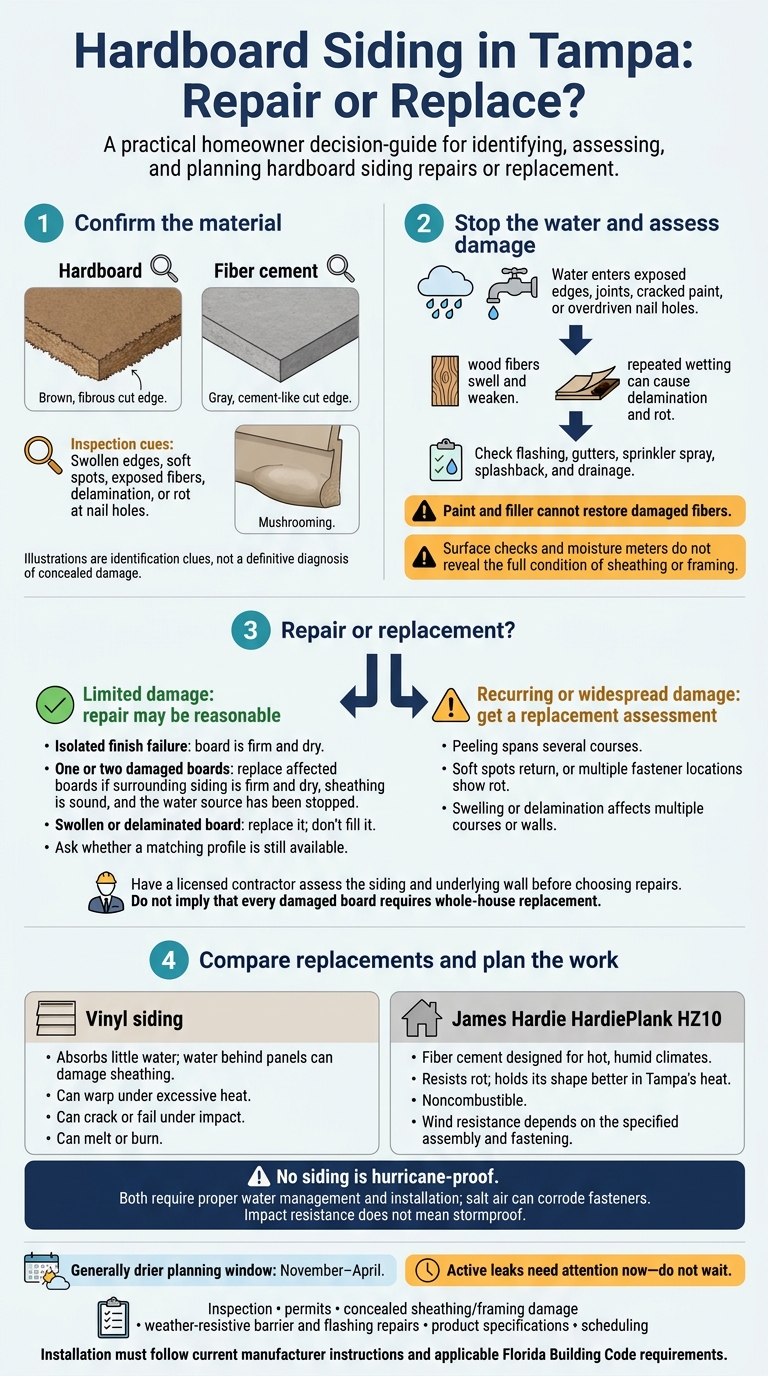
Hardboard Siding in Tampa: Repair or Replace?
How to Replace Hardboard Siding
sbb-itb-85e0110
How to Identify Hardboard Siding
Hardboard siding combines wood fibers, resins, and wax into an engineered wood product. The label Masonite often refers to hardboard siding, but it doesn’t confirm the brand.
Hardboard usually comes in horizontal lap planks or 4-by-8-foot grooved panels. Some boards also have an embossed wood-grain finish.
A cut edge offers one of the best clues: hardboard looks brown and fibrous, while fiber cement looks gray and cement-like. Swollen or soft edges mean the board is already taking on water.
Signs of Damage: Swollen Edges, Soft Spots, and Rot
Swollen bottom edges can develop a rounded lip, often called mushrooming. Other warning signs include flaking paint, exposed fibers, soft spots, delamination, and rot at nail holes.
In Tampa Bay, bottom courses and areas exposed to sprinkler spray or splashback tend to fail first. Tampa’s humidity can make that damage worsen fast.
Moisture meters and surface checks can flag problems. They don’t reveal the full condition of the sheathing or framing underneath.
Why Tampa’s Rain and Humidity Damage Hardboard
If your boards already show swelling or rot, Tampa’s weather usually helps explain why. Hardboard can fail fast once water gets in, even through small gaps where wind-driven rain reaches the wood-fiber core.
- Exposed edges and joints wick water into the core.
- Cracked paint and overdriven nail holes break the seal.
- Wet fibers swell, weaken, and often never fully recover. Repeated exposure can cause delamination, where layers separate.
In coastal Tampa, salt air mainly corrodes fasteners and breaks down caulk. Those openings let water in, and water intrusion causes the actual board damage.
How Repeated Wetting Makes Damage Worse
During the rainy season, high humidity slows drying, allowing each wetting cycle to cause more damage. The National Weather Service Tampa Bay describes the region’s wet and dry seasons; roughly November through April offers the drier planning window.
If damage keeps returning, review these signs your Tampa home needs siding replacement. Ask a contractor to check flashing and drainage, not just paint, before you patch or repaint. Since water intrusion often starts at the top, you should also check for signs your roof needs replacement to ensure the entire building envelope is secure.
A coating cannot fix missing flashing or trapped water. Without addressing those problems, patching and repainting often buy time rather than provide a long-term fix.
Why Patching and Repainting Only Buy Time
Caulk, filler, and paint cannot restore damaged hardboard fibers. Painting over a swollen or soft board can trap moisture inside. Once a board swells, softens, or separates into layers, patching no longer fixes the damage.
Address the water source separately from surface repairs. Check for sprinkler overspray, gutter overflow, splashback, and failed flashing.
When Damage Calls for Repair or Replacement
Replacing one or two damaged boards may make sense when the surrounding siding stays firm and dry. That’s different from filling a soft, swollen board. Damage that returns or affects large areas points toward full replacement.
Use these damage patterns to weigh repair against replacement:
| Damage pattern | When repair may be reasonable | When to consider full replacement |
|---|---|---|
| Isolated finish failure | The board is firm and dry. | Peeling spans several courses. |
| One or two damaged boards | The sheathing is sound, and repairs have stopped the water source. | Soft spots return, or multiple fastener locations show rot. |
| Swelling or delamination | Replace the board; don’t fill it. | Damage affects multiple courses or walls. |
Ask your contractor whether a matching profile is still available. Discontinued hardboard profiles can make patches difficult to match.
Also ask how your bid accounts for hidden sheathing or framing damage. Surface repairs can miss these problems.
If damage is spreading, the next step is full replacement rather than more patches. At that point, James Hardie HardiePlank offers a lasting replacement option.
Replacing Hardboard With James Hardie HardiePlank
When hardboard damage spreads, another patch may not address the problem. HardiePlank keeps hardboard’s classic horizontal look but replaces wood fiber with fiber cement. James Hardie makes its HZ10 line for hot, humid climates like Florida.
Vinyl vs. James Hardie Fiber Cement in Tampa Bay
Bayshore recommends and installs James Hardie fiber cement, not vinyl, as a lasting alternative to hardboard siding.
| Performance factor | Vinyl siding | James Hardie HardiePlank HZ10 |
|---|---|---|
| Moisture and salt air | Absorbs little water, but water behind panels can damage sheathing; fasteners may corrode. | Resists rot but still needs proper drainage, flashing, and corrosion-resistant fasteners in salt air. |
| Heat and sun | Can warp under excessive heat. | Holds its shape better in Tampa’s heat. |
| Wind and debris | Can crack or fail under impact. | Wind resistance depends on the specified assembly and fastening; impact resistance does not mean stormproof. |
| Fire | Can melt or burn. | Noncombustible. |
No siding is hurricane-proof. Performance depends on the complete siding assembly, fastening, and installation.
These differences also help explain why Tampa homeowners are moving away from wood siding.
What Tear-Off May Reveal
Swelling and rot can point to deeper wall damage that surface repairs miss. Removing old siding may reveal rotten sheathing, damaged framing, missing flashing, or poorly sealed openings.
Proper replacement includes a weather-resistive barrier, flashing repairs, and correct clearances. Installers must also follow current manufacturer instructions and applicable Florida Building Code requirements.
Plan Dry-Season Replacement and Schedule an Estimate
Plan your replacement during Tampa’s generally drier window, from late fall through spring. If you have active leaks, protect those areas immediately rather than waiting.
Let the Damage Pattern Decide Between Repair and Replacement
Hardboard fails when water reaches its wood-fiber core, so the first fix is the water source: flashing, gutters, sprinkler spray, and drainage. Replacing one or two boards can hold when the surrounding siding is firm and dry and the sheathing is sound. Swelling, soft spots, or rot across several courses or walls point to full replacement, and James Hardie fiber cement is the replacement option this guide recommends.
Ask each contractor for an estimate that covers inspection, permitting, concealed-damage repairs, product specifications, and scheduling. Use this Tampa Bay siding estimate guide to compare line items so every bid covers the same scope. Tear-off can reveal rotten sheathing or framing, so ask how each bid handles hidden damage before you sign.
Bayshore Exteriors (CGC1536143) handles siding replacement in Tampa for homes across South Tampa and the wider Hillsborough County service area.
FAQs
What affects the cost of replacing hardboard siding?
Your cost depends mainly on wall area, product finish, and any hidden sheathing or framing damage crews find during removal. In 2026, professional James Hardie installation typically costs $8–$13 per square foot. Factory-finished ColorPlus or custom Dream Collection colors can also affect your price.
Vinyl may cost you less upfront. But it doesn’t match James Hardie fiber cement’s durability against Tampa’s humidity, salt air, and hurricane-force winds.
Can James Hardie siding match my existing hardboard?
James Hardie siding is not an exact match or replacement board for existing hardboard. The materials, thicknesses, and profiles differ, so you can’t mix them on the same wall. If your hardboard has extensive damage, you’ll need full replacement rather than patches.
James Hardie fiber cement offers a long-lasting, rot-resistant replacement designed for Florida’s humidity and wind conditions. Schedule a siding estimate to discuss your project.
What maintenance will HardiePlank need in Tampa?
HardiePlank needs less maintenance than wood, but it still needs care. Plan to repaint every 10 to 15 years, though factory-applied finishes may last longer.
Keep your siding clean, and check periodically for cracks, gaps in caulk, and loose fasteners, especially after storm seasons. Keep moisture-resistive barriers and flashing intact to help protect your home and support your siding’s long-term performance in Tampa’s climate.
Related Blog Posts
✔ START TODAY
Personal and targeted approach

✔ START TODAY
Ready to Get Started?
Trusted and reliable Hardie board siding services backed by expert craftsmanship and high performance materials. We help homeowners achieve a durable, low maintenance exterior that looks great and stands strong for years to come.
Book an Appointment
We have received your estimate request and will be reaching out to you shortly.

✔ FAQ
Your Questions. Our Expertise.
How do I get an accurate price for my project?
Are you licensed and insured in Florida?
How long does a typical installation take?
Does your work come with a warranty?
Why do you recommend James Hardie siding for Florida?
What specific services do you provide?