Siding Contractors in Tampa: License Checks and Red Flags
Confirm active state licenses, permits, and insurance for Tampa siding; avoid permit avoidance, large upfront deposits, and poor vinyl.
Lorem ipsum dolor sit amet, consectetur adipiscing elit. Suspendisse varius enim in eros elementum tristique. Duis cursus, mi quis viverra ornare, eros dolor interdum nulla, ut commodo diam libero vitae erat. Aenean faucibus nibh et justo cursus id rutrum lorem imperdiet. Nunc ut sem vitae risus tristique posuere.
Hiring a siding contractor in Tampa? Here's the deal: skipping the license check can cost you more than just money. Florida law makes unlicensed contracting a first-degree misdemeanor (and a felony for repeat offenses). Worse, if an uninsured worker gets hurt on your property, you’re footing the bill. That’s why verifying credentials isn’t optional - it’s your first line of defense.
The bottom line: Always hire a contractor with a state-certified license (CBC or CRC) for siding projects in Tampa. They can legally pull permits and ensure your siding meets the Florida Building Code (FBC) 8th Edition, including wind-load standards critical in hurricane-prone areas. Unlicensed contractors? They can’t guarantee inspections, and their work might void your homeowners’ insurance.
Key points to remember:
- Permit Tip: Full siding replacements need permits. Minor repairs (under 100 sq. ft.) may not.
- Material Choice: Vinyl siding struggles in Tampa’s heat and humidity. James Hardie fiber cement performs better under these conditions.
- Red Flags: Avoid contractors who ask you to pull permits or demand more than 10% upfront.
Hiring the right contractor ensures your project meets Florida’s strict standards and protects your investment. Let’s dive into what you need to know.
Licensing and Regulatory Requirements for Tampa Siding Contractors
Making sure your contractor has the proper licensing is a critical step to protect your project and maintain insurance coverage. Florida’s licensing structure can be a bit complex, but understanding it will help you ask the right questions before committing to any contractor. This is especially important in Hillsborough County, where local codes and jurisdictional boundaries play a major role in determining whether your project meets legal and inspection standards.
Florida Contractor Licensing: State Certification vs. Local Registration
Florida offers two types of contractor licenses: state-certified and state-registered. The distinction is important for homeowners in Tampa.
A state-certified contractor holds a license from the Florida Department of Business and Professional Regulation (DBPR). This license is valid across all 67 counties in Florida, so no additional local approval is needed. For siding projects, you’ll want to confirm they have either a CBC (Certified Building Contractor) or CRC (Certified Residential Contractor) license.
On the other hand, a state-registered contractor is only allowed to work in the specific local jurisdiction where they’ve registered. As highlighted by the Tampa Contractor Authority:
"A 'registered' license from an adjacent jurisdiction does not extend to Tampa."
For example, a contractor registered in Pinellas County cannot legally pull permits for work in Hillsborough County or the City of Tampa.
Recent legislative changes, including House Bill 735 and SB 1142, are phasing out many locally registered licenses for scopes already regulated at the state level. This makes hiring a state-certified contractor a more reliable choice moving forward. Always verify a contractor’s license status on myfloridalicense.com. Look for an "Active" status - anything like "Null & Void", "Delinquent", or "Suspended" means they can’t legally pull permits.
Now, let’s see how these licensing standards apply specifically to siding projects in Hillsborough County.
Hillsborough County Permit Requirements for Siding Projects
Whether your property lies within Tampa city limits or in unincorporated Hillsborough County determines which permitting system you’ll need to use. The City of Tampa's Construction Services Division manages permits for properties within the city, while HillsGovHub handles permits for areas like Brandon, Riverview, and Lutz.
Here’s the general rule: a full siding replacement always requires a permit, as does any material change - for instance, switching from vinyl to fiber cement. Minor repairs under about 100 square feet are usually considered routine maintenance and don’t require a permit. Permit fees in Tampa typically range from $100 to $800, depending on the size and scope of the project.
If your home was built before 1978, you may also need asbestos testing before removing old siding. This can add $300 to $800 to your pre-project costs.
Only a licensed contractor should pull the permit. This ensures they take on the legal responsibility for meeting building codes and passing inspections. Be cautious of any contractor who suggests you pull the permit yourself or skip it altogether - that’s a major red flag.
These permitting requirements are key to ensuring your siding project complies with local building codes.
FBC 8th Edition Standards and Tampa's Hurricane and Climate Risks
Siding installations in Tampa must meet the standards of the Florida Building Code (FBC) 8th Edition, which will take effect in March 2026. This code is based on the 2021 International Residential Code (IRC) and includes provisions tailored to Tampa’s coastal climate.
Two specific sections of the code are especially relevant:
- IRC R703.2: Requires a water-resistive barrier to be installed behind all exterior cladding. This is crucial in Tampa’s humid, rainy environment.
- IRC R703.4: Mandates flashing around all windows, doors, and other openings to prevent water intrusion.
Although Tampa is not classified as a High-Velocity Hurricane Zone (HVHZ) like Miami-Dade or Broward, it is still part of a wind zone that requires siding materials to have Florida Product Approval numbers. These numbers certify that the materials have been tested for wind resistance in coastal conditions.
Your contractor should be able to confirm that the siding they’re installing meets these requirements. Failing to comply with these standards - or skipping permits altogether - can void your homeowners’ insurance, create legal issues, and make it harder to sell your property in the future.
sbb-itb-85e0110
How to Verify a Siding Contractor's License and Insurance in Tampa
Understanding how to verify a contractor's credentials is essential to protect your home and investment. Fortunately, Florida provides straightforward tools to help you ensure your contractor is properly licensed and insured.
Checking a Contractor's License Status and Complaint History
Start by visiting myfloridalicense.com, the Florida DBPR's public database. Use the license number from the contractor's estimate, business card, or vehicle to search. Be cautious of similar names across different businesses. Look for an "Active" status on the record - statuses like "Null & Void", "Delinquent", or "Suspended" mean the contractor cannot legally pull permits in Tampa or anywhere in Florida.
While you're on the DBPR site, check the administrative history for any past disciplinary actions or complaints. This can give you an idea of how the contractor has handled issues in the past.
Next, cross-check the business name from the contractor's quote with Sunbiz (sunbiz.org), the Florida Department of State's business registry. The name on the contract, vehicle, and Sunbiz listing should match exactly. A mismatch might signal "license borrowing", where an unlicensed individual uses someone else's credentials to secure jobs. You can also use the City of Tampa's Building and Zoning portal (tampa.gov/buildingzoning) or HillsGovHub (hcfl.gov) to review the contractor's permit history and ensure there are no unresolved permits from incomplete projects.
Once you've confirmed the license, the next step is verifying insurance coverage.
Confirming Insurance Coverage and Permit Responsibility
Proper insurance is just as important as licensing. Florida law (§489.1195) requires licensed contractors to maintain both general liability insurance and workers' compensation coverage. Without workers' comp, you could be held responsible if a worker gets injured on your property.
Ask for a Certificate of Insurance (COI) before signing a contract. Then, contact the insurer to confirm that the policy is active and will remain valid for the duration of your project. You can also verify workers' compensation coverage through the appropriate online tools. Make sure the business name on the COI matches the name on the contract and the DBPR license exactly.
Vinyl Siding vs. James Hardie Fiber Cement: What Tampa Homeowners Need to Know
Vinyl Siding vs. James Hardie Fiber Cement: Tampa Climate Performance
Once you've verified your contractor's credentials, the next step is selecting a siding material that can handle Tampa's challenging climate.
How Tampa's Climate Affects Siding Performance
Tampa's weather puts siding materials to the test. With summer humidity often topping 70%, salty air drifting in from Tampa Bay and the Gulf, and hurricane winds reaching up to 150 mph in some coastal areas of Hillsborough County, siding materials face unique pressures. Each material responds differently to these conditions.
Vinyl siding, made from plastic, is vulnerable to Tampa's intense sunlight. The UV exposure can cause it to soften, warp, or even crack over time. Salt in the air speeds up its breakdown, and during hurricanes, strong winds can rip panels off.
James Hardie fiber cement, on the other hand, is a cement-cellulose composite designed to hold up under extreme heat and harsh conditions. As Bayshore Exteriors explains:
"James Hardie siding is specifically designed to resist harsh elements - from intense sun and humidity to storms and coastal conditions."
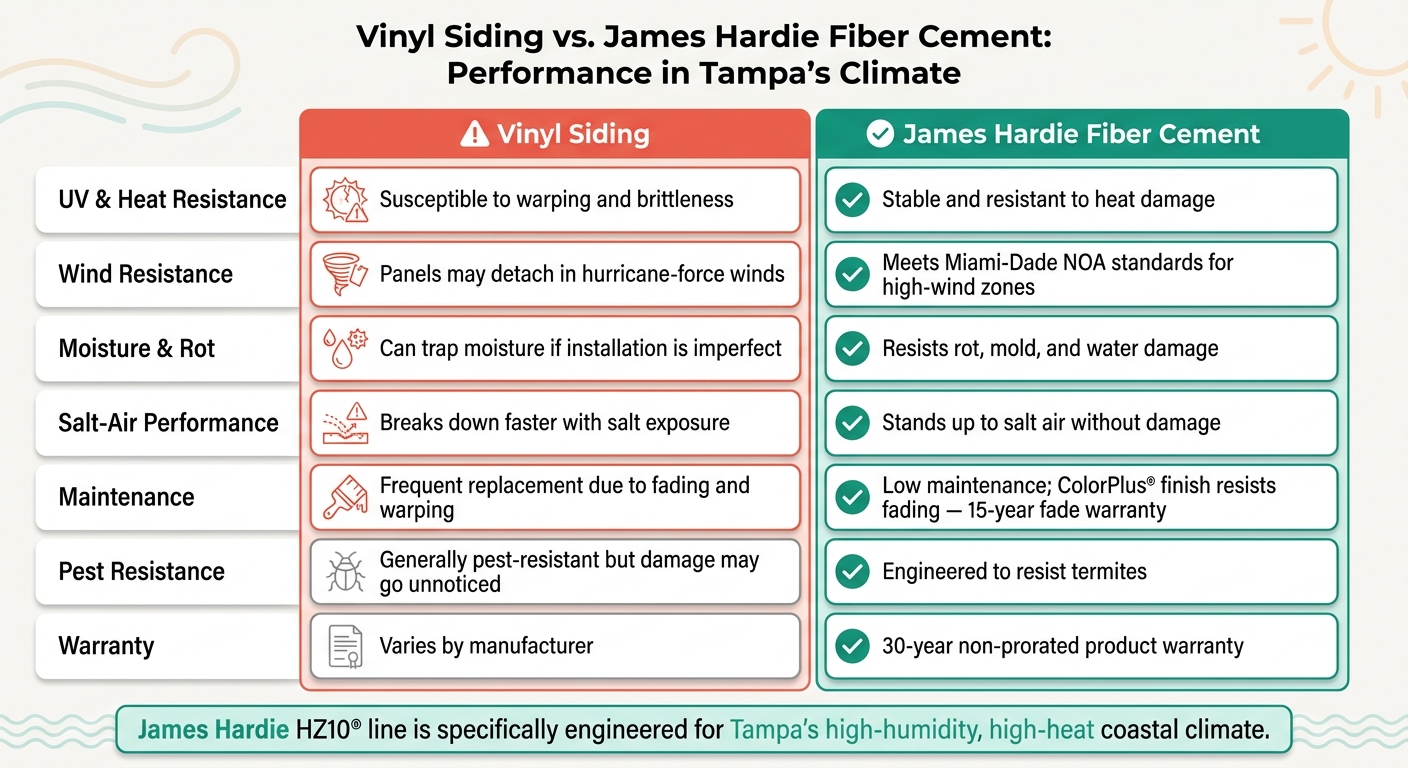
Here's a side-by-side look at how vinyl siding and James Hardie fiber cement measure up under Tampa's tough conditions.
Vinyl vs. James Hardie Fiber Cement: Side-by-Side Performance Comparison
The differences between these materials become clear when you examine their performance in Tampa's climate.
| Feature | Vinyl Siding | James Hardie Fiber Cement |
|---|---|---|
| UV & Heat Resistance | Susceptible to warping and brittleness in Florida's sun | Stable and resistant to heat damage |
| Wind Resistance | Panels may detach in hurricane-force winds | Meets Miami-Dade NOA standards for high-wind zones |
| Moisture & Rot | Can trap moisture if installation isn't perfect | Resists rot, mold, and water damage |
| Salt-Air Performance | Breaks down faster with salt exposure | Stands up to salt air without damage |
| Maintenance | Needs frequent replacement due to fading and warping | Low maintenance; ColorPlus® finish resists fading |
| Pest Resistance | Generally pest-resistant, but damage might go unnoticed | Specifically engineered to resist termites |
| Warranty | Varies by manufacturer | 30-year non-prorated product warranty |
The HZ10® product line from James Hardie is tailored for high-humidity and high-heat environments like Tampa. Additionally, its ColorPlus® factory-applied finish includes a 15-year warranty against fading - an important feature in a region where traditional paint doesn't last long.
Bayshore Exteriors exclusively installs James Hardie fiber cement to ensure the best results for Tampa's coastal conditions. If you're considering fiber cement siding, ask your contractor if they specialize in James Hardie products and confirm they follow the HZ10 climate zone installation standards. This ensures your siding is built to handle Tampa's unique challenges.
Red Flags to Watch for When Hiring a Siding Contractor in Tampa
Hiring the right siding remodeling service is just as crucial as choosing quality materials. Even with the perfect siding, an unqualified contractor can lead to failed inspections, fines, or expensive do-overs. Tampa has strict regulations, and Florida takes licensing violations seriously - just last year, the Department of Business and Professional Regulation (DBPR) shut down 1,247 unlicensed contractors. To avoid costly mistakes, keep an eye out for these common warning signs.
Common Contractor Warning Signs and How to Spot Them
One of the first things to look for is a missing license number on advertisements, vehicles, or estimates. Florida law mandates that contractors display their license number in all advertising and written communications. If you don’t see it, consider it a major red flag.
Be cautious about payment demands as well. Florida Statute §489.126 limits upfront payments to no more than 10% of the total cost for projects over $2,500 unless the contractor has a performance bond in place. If someone asks for more than 10% upfront, it’s a warning sign. Additionally, any project over $500 in labor and materials requires a written contract by law. If a contractor is reluctant to provide one, walk away.
Another big concern is permit avoidance. A reputable contractor will always pull the necessary permits. As the Tampa Contractor Authority warns:
"A contractor who advises against pulling required building permits to 'save time or money' is either unlicensed, or attempting to avoid code inspection."
In Tampa, permits are mandatory for full siding replacements or material changes. If a contractor asks you to pull an owner-builder permit, it’s a clear signal they’re trying to sidestep their responsibilities.
Pay attention to the business name on the estimate. If it doesn’t match the records on Sunbiz or DBPR, it could mean the contractor is using a borrowed license. After storms, door-to-door solicitors often appear, pressuring homeowners into signing Assignment of Benefits (AOB) forms. Florida has heavily restricted this practice due to its association with fraud.
How to Use Public Records to Confirm Contractor Claims
Public records are your best friend when verifying contractor credentials. Start by checking the DBPR website to confirm their license status. Avoid contractors with statuses like "Null & Void", "Delinquent", or "Suspended", as they cannot legally pull permits. Also, ensure the business name matches across DBPR and Sunbiz records to avoid falling victim to license borrowing.
When it comes to insurance, don’t just accept a paper Certificate of Insurance (COI). Call the insurance provider directly to verify that the contractor’s general liability and workers’ compensation policies are active and cover your project dates. As the CheckLicensed Editorial Team highlights:
"Insurance companies may deny claims for work done by unlicensed contractors."
Finally, check the contractor’s permit history. If your property is in Tampa, use the City of Tampa’s development portal. For unincorporated Hillsborough County, HillsGovHub is your go-to resource. A contractor with a solid track record of properly opened and closed permits is far more likely to meet code requirements.
| Verification Step | Resource | What to Confirm |
|---|---|---|
| License Status | myfloridalicense.com (DBPR) | Status reads "Active"; no disciplinary history |
| Business Entity | Sunbiz.org | Business name matches the license holder |
| Insurance | Call the insurer on the COI | Policy is active and covers project dates |
| Permit History | HillsGovHub / Tampa.gov | Contractor has a record of closed permits |
Conclusion: How to Choose the Right Siding Contractor for Your Tampa Home
When selecting a siding contractor in Tampa, prioritize verified credentials, proper licensing, and materials designed to handle Florida's unique climate.
The materials you choose are just as critical as the contractor. While vinyl siding might initially seem appealing, Florida's humidity, salty air, and hurricane-strength winds often expose its vulnerabilities. James Hardie fiber cement siding, built to HZ10 coastal specifications and compliant with the Florida Building Code's 8th Edition standards, is crafted to endure these challenges. As Bayshore Exteriors explains:
"Higher upfront cost delivers better long-term value and resale appeal."
Before making any payments, always double-check the contractor's license. Florida law caps upfront deposits at 10% for projects exceeding $2,500 unless a performance bond is provided. If a contractor resists these requirements, consider it a red flag.
At the end of the day, accountability is key. Bayshore Exteriors (CGC1536143), a licensed General Contractor and James Hardie Elite Contractor, serves Hillsborough County and the greater Tampa Bay area. They ensure every project complies with Florida Building Code standards and offer a Lifetime Workmanship Warranty for added peace of mind.
FAQs
Which license do I need a Tampa siding contractor to have?
To comply with Florida regulations, make sure you hire a contractor who holds a valid, active license issued by the Florida Department of Business and Professional Regulation (DBPR). For residential projects in Tampa, focus on these license types: Certified Residential Contractor (CRC), Building Contractor (CBC), or General Contractor (CGC). Always confirm the license status is Active, as contractors with Null and Void or Suspended licenses are not legally allowed to pull permits for your project.
What if my siding contractor asks me to pull the permit?
If a siding contractor asks you to pull the permit, consider it a big warning sign. Licensed contractors are responsible for obtaining the necessary permits for their work. When they push this task onto you, it often suggests they might not have a license or are trying to dodge inspections. This could leave you on the hook for uninsured work and potential problems when it’s time to sell your home. To protect yourself, always choose a licensed and insured contractor who takes care of permits and ensures the work meets Florida building codes.
Is James Hardie fiber cement worth it over vinyl in Tampa?
Yes, James Hardie fiber cement outperforms vinyl when it comes to Tampa's challenging climate. Vinyl struggles with extreme heat, often warping under high temperatures, fading from constant UV exposure, and being prone to damage from hurricane winds and flying debris. In contrast, fiber cement is built to handle these challenges. It stands strong against moisture, salt air, and rot, while retaining its shape even in scorching conditions. Plus, it boasts a Class A fire rating and excellent impact resistance, offering a level of durability and protection that vinyl simply can’t provide.
Related Blog Posts
✔ START TODAY
Personal and targeted approach

✔ FAQ
Your Questions. Our Expertise.
How do I get an accurate price for my project?
Are you licensed and insured in Florida?
How long does a typical installation take?
Does your work come with a warranty?
Why do you recommend James Hardie siding for Florida?
What specific services do you provide?
✔ START TODAY
Ready to Get Started?
Trusted and reliable Hardie board siding services backed by expert craftsmanship and high performance materials. We help homeowners achieve a durable, low maintenance exterior that looks great and stands strong for years to come.
Book an Appointment
We have received your estimate request and will be reaching out to you shortly.
.webp)