
HOA Approval for New Siding in Tampa Bay: What the Process Requires
Which documents and materials Tampa Bay HOAs require for siding approval, how to avoid delays, and permit steps.
Lorem ipsum dolor sit amet, consectetur adipiscing elit. Suspendisse varius enim in eros elementum tristique. Duis cursus, mi quis viverra ornare, eros dolor interdum nulla, ut commodo diam libero vitae erat. Aenean faucibus nibh et justo cursus id rutrum lorem imperdiet. Nunc ut sem vitae risus tristique posuere.
Tampa Bay siding jobs often stall for 30 to 60 days because the HOA packet goes in late or incomplete. If you started by looking at vinyl siding, here’s the short answer: you need HOA approval before work starts, and many Tampa Bay boards lean toward fiber cement because it fits community rules better and holds up better in heat, humidity, salt air, and storm-season wind.
Think the board only checks color. But it doesn’t. In Hillsborough County-area communities, the HOA often reviews material, profile, texture, and contractor paperwork before your permit even enters the picture. In other words: your siding choice and your paperwork both shape the outcome.
| Factor | Vinyl Siding | Fiber Cement |
|---|---|---|
| HOA fit | Often restricted in some communities | More likely to match HOA standards |
| Tampa Bay weather | More prone to fading or movement over time | Handles humidity, salt air, and wind better |
| Upfront cost | About $3 to $7 per sq. ft. | About $5 to $12 per sq. ft. |
| Approval friction | Can face more pushback | Often gets fewer objections |
After you read this, you should know what to ask your contractor for before you send anything to the HOA.
What Tampa Bay HOAs Review Before Approving New Siding
Tampa Bay HOAs control siding changes through their governing documents. That means your first job is to find out which rules apply in your neighborhood before you pick a product or call a contractor.
The Community Documents That Control a Siding Approval Request
Two documents usually control a siding request: the CC&Rs (Covenants, Conditions, and Restrictions) and the ARC or DRB architectural guidelines. The CC&Rs give the HOA its legal power to regulate exterior changes. The architectural guidelines spell out the details, like approved materials, textures, installation styles, and colors.
Florida Statute 720 sets the legal framework for how Florida HOAs handle these reviews. But each community still writes its own standards within that framework. In other words: the state sets the lane lines, and your HOA decides how tight the lane is.
That’s why rules can shift from one neighborhood to the next. In many waterfront communities, associations may ban vinyl siding and steer homeowners toward fiber cement or wood to keep the neighborhood’s look consistent.
You can usually find your CC&Rs and architectural standards in your HOA management portal. They also may be in your closing documents. Those are the papers that tell you what the HOA will review next.
Exterior Changes That Require HOA Approval
Most Tampa Bay HOAs require ARC review for any visible exterior change. That includes full siding replacement, material changes, profile changes, and color changes.
Think a like-for-like swap skips review? Usually not. Even if you replace the siding with the same material and the same color, many HOAs still require formal approval, though some offer a faster review path. A color change by itself also usually needs written approval, even when the material stays the same.
HOA review and permit review are not the same thing. The ARC looks at appearance. The building department checks code compliance.
Timing matters. Many Florida HOAs meet once a month, and reviews often take 30 to 60 days. During storm season, those delays can push your start date back even more.
Here’s the safe rule: assume approval is required for any visible exterior change unless your HOA says otherwise in writing.
Once you know the rules, build your submittal packet around them.
sbb-itb-85e0110
What to Include in a Siding Submittal Packet
Most HOA siding delays happen for one reason: the packet is missing something. Send one organized packet with every item the ARC or DRB asks for. In Tampa Bay, boards also pay close attention to products that can handle humidity and salt air.
Here’s the part that trips people up. The board can only approve what your packet clearly shows.
Documents HOAs Commonly Ask for Before New Siding Can Start
Put everything in one complete packet. That gives the board what it needs to review appearance, neighborhood consistency, and code readiness at the same time.
| Required Document | What to Include |
|---|---|
| Signed ARC Request Form | Homeowner signature; lot number and property address; scope of work |
| Exterior Photos | Current photos of all elevations; marked-up photos or simple renderings showing where siding and colors change |
| Product Cut Sheet | Manufacturer name, product line, and specs |
| Color Documentation | Exact color names, codes, and color chips or sample boards |
| Contractor Packet | Florida license number; certificate of insurance for general liability and workers' compensation; start and finish dates |
If your HOA publishes approved colors, stick to that list. It cuts down the chance of a rejection over color alone.
Product Details That Make a Siding Request Easier to Review
Product specs matter because the board reviews the finished exterior, not just the material name. In other words: “fiber cement” by itself usually isn’t enough.
Give the board the details it needs to approve the full look in one pass. Include the manufacturer, product line, profile, and texture. Add trim, soffit, and fascia colors too, so the committee sees the whole exterior plan instead of piecing it together on its own.
If you’re using James Hardie fiber cement, include the manufacturer specification sheet and the product line details. If your HOA asks for code-compliance info, state that the project will meet the Florida Building Code, 8th Edition, and required wind-load approvals.
Permit Notes to Include Before the Permit Is Issued
One short note can make your packet stronger: state that your Florida-licensed contractor will pull all required permits and handle all inspections. HOAs want proof that the project will follow the law and go through city or county review.
That statement does more than fill space. It shows the work will comply with the Florida Building Code, 8th Edition, and that a Florida-licensed contractor will perform it.
If your home was built before 1978, add asbestos-testing documentation if required.
Once your packet is complete, the next step is choosing the siding material itself.
Vinyl Siding vs. James Hardie Fiber Cement in Tampa Bay Conditions
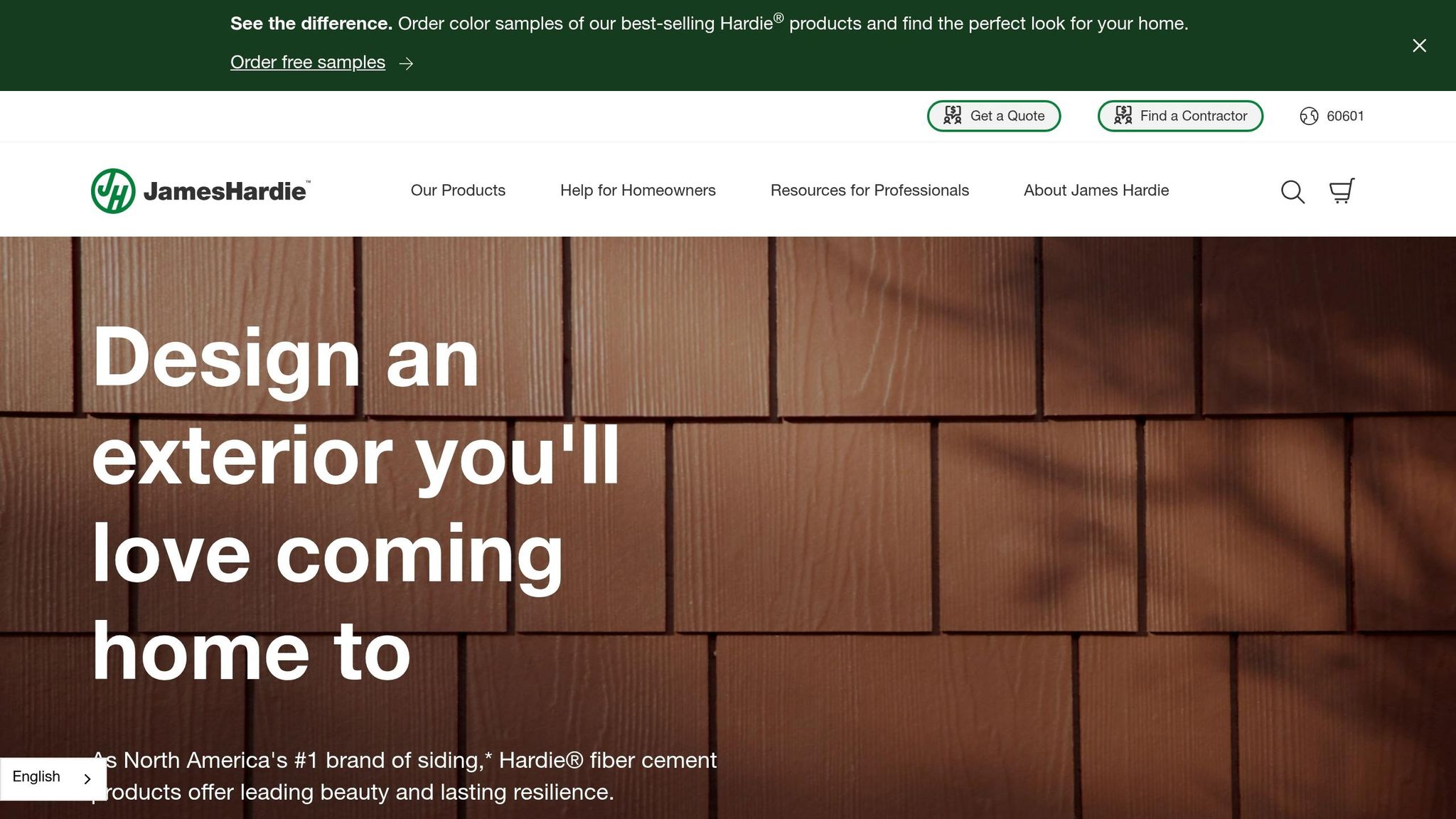
In Tampa Bay, your siding choice affects HOA approval and how well the exterior holds up over time. Color matters, sure. But the material often matters just as much, because many boards look at two things first: does it match community standards, and can it handle local weather?
| Feature | Vinyl Siding | James Hardie Fiber Cement |
|---|---|---|
| Wind Performance | Can pull away or rattle in high winds | Designed to perform better in high winds |
| Humidity & Salt-Air Resistance | Prone to UV warping over time | Rot-proof, termite-proof, and salt-air resistant |
| Color Stability | Fades over time in intense sun | Factory-applied UV-resistant finishes available |
| Appearance in HOA Communities | Less traditional in HOA communities | Mimics traditional wood grain; fits coastal community standards |
Why Fiber Cement Fits Tampa Bay HOA Standards Better Than Vinyl
Many Tampa Bay HOAs don't just ask which siding lasts longer. They ask whether it fits the neighborhood's architectural rules. That's the sticking point. A lot of associations restrict or ban vinyl because it doesn't match the wood-look style their CC&Rs call for.
Fiber cement makes that easier for boards to approve. It gives them a finish that stays in line with the neighborhood's look, instead of drifting away from it after a few seasons.
It also comes with an estimated 30–50 year lifespan. For HOA boards that care about long-term property values, that matters. In other words: when you send in product specs, fiber cement usually gives the board fewer reasons to push back. Include the exact product line and climate rating in your submittal packet.
What Homeowners Considering Vinyl Should Know About Coastal Durability
If you're comparing based on upfront price, vinyl can look like the cheaper pick at first. Installed vinyl usually runs $3–$7 per sq. ft., while fiber cement runs $5–$12 per sq. ft..
But price at install isn't the whole story. In Tampa Bay, vinyl often shows wear sooner under sun, heat, and moisture. However, durability isn't the only issue. Many communities restrict vinyl outright, so you should check the CC&Rs before you submit anything. Or put another way: a lower price doesn't help much if the board won't approve the material.
That's why many homeowners start with fiber cement when they want fewer HOA objections.
Once the board approves the material, the project moves to permitting and final HOA sign-off.
How to Get from HOA Approval to Final Sign-Off

HOA Siding Approval Process in Tampa Bay: Step-by-Step Guide
Once your HOA signs off on the siding plan, the next phase starts: permits and inspections. Your contractor handles the permit application and sends in the HOA-approved product specs, color picks, samples, photos, and contractor paperwork. In Tampa Bay, permit review usually takes about one week.
You need both HOA approval and a building permit before anyone starts work. In Tampa, the Florida Building Code requires a building permit for full siding replacement, and the permit card must stay posted where people can see it at the job site before construction begins. Miss either step, and the city or HOA can hit you with fines from $100 to more than $1,000 per offense. In some cases, they can also make you remove finished work.
After the permit comes through, installation can start. Then inspections move in at set points. The city usually checks the job after the weather barrier and flashing go in, and then again after the siding is installed.
That final match matters. A lot. The finished job needs to line up exactly with the HOA-approved plan, especially on fiber cement projects where boards often look closely at appearance details.
Keep all project records in one file:
- HOA approval letter
- Building permit
- Inspection reports
- Product specs
- Warranty papers
Some HOAs also ask for a final ARC closeout before they mark the file complete. That paper trail helps you if you sell the home, deal with an insurance review, or need to answer HOA questions later.
FAQs
Can my HOA reject vinyl siding?
Yes. Your HOA can turn down vinyl siding if your community’s governing documents or architectural guidelines limit it or ban it. HOAs control exterior materials and appearance, so the ARC can deny any request that doesn’t match those rules.
If you’re comparing choices, fiber cement siding often fits Tampa Bay homes better than vinyl. It tends to hold up better, looks better over time, and handles Florida weather more reliably.
What if I start before HOA approval?
Starting before you get written approval from your HOA is a major risk. If your siding project doesn’t match your community’s rules, you may have to remove it or redo it with your own money.
A city permit does not replace the HOA architectural review process. They’re not the same thing. You still need written approval from your Architectural Review Committee before any work starts.
Who handles permits and inspections?
In Tampa Bay, permits and inspections usually run through two separate channels: your HOA and your local government.
Start with your HOA. Get written approval from the Architectural Review Committee or Design Review Board before you apply for a city building permit. That step matters. If you skip it, you can end up with a city-approved project that your HOA still rejects.
Your contractor will usually pull the permits and set up the required municipal inspections. But don't let work begin early. Wait until your HOA signs off on the project and the city issues the permits you need.
Related Blog Posts
✔ START TODAY
Personal and targeted approach

✔ FAQ
Your Questions. Our Expertise.
How do I get an accurate price for my project?
Are you licensed and insured in Florida?
How long does a typical installation take?
Does your work come with a warranty?
Why do you recommend James Hardie siding for Florida?
What specific services do you provide?
✔ START TODAY
Ready to Get Started?
Trusted and reliable Hardie board siding services backed by expert craftsmanship and high performance materials. We help homeowners achieve a durable, low maintenance exterior that looks great and stands strong for years to come.
Book an Appointment
We have received your estimate request and will be reaching out to you shortly.
.webp)