
How Long Does a Roof Replacement Take in Tampa Bay?
Shingle installs: 1–3 crew days (2–4 weeks total); metal 2–5 days; tile 3–10. Permits, inspections, delivery and weather can extend timing.
Lorem ipsum dolor sit amet, consectetur adipiscing elit. Suspendisse varius enim in eros elementum tristique. Duis cursus, mi quis viverra ornare, eros dolor interdum nulla, ut commodo diam libero vitae erat. Aenean faucibus nibh et justo cursus id rutrum lorem imperdiet. Nunc ut sem vitae risus tristique posuere.
Your Tampa Bay roof replacement usually takes 1–3 on-site workdays for shingles, but plan for 2–4 weeks for the whole project. Ask for separate dates for installation and final permit approval.
Metal, shingles, or tile installations vary in duration; metal typically takes 2–5 workdays, while tile takes 3–10. Roof size, slope, hidden decking damage, material delivery, and rain can extend those windows.
Before work starts, confirm these details with your contractor:
- Permits and inspections: Verify which city or county handles your address and who schedules inspections.
- Schedule and weather: Get written milestones, delay updates, and an overnight roof-protection plan. Hurricane season continues through November 30.
- Home preparation: Clear driveway access, protect fragile items, and keep children and pets away from the work zone.
Treat the schedule as an estimate, not a promise. Your roof evaluation should turn these ranges into a <u>property-specific timeline</u>.
Installation Times for Shingle, Metal, and Tile Roofs
Compare bids by roof area, not living area. Roofers measure the roof surface in “squares”; 1 square equals 100 square feet. Ask for the measured roof area, layout complexity, and planned crew size behind your estimate.
| Roofing material | Typical on-site installation | Main time drivers |
|---|---|---|
| Asphalt shingles | 1–3 crew days | Roof size, steep slopes, multiple tear-off layers, and decking repairs. Simple roof layouts usually take less time. For long-term savings, consider impact-resistant shingles to lower insurance premiums. |
| Metal roofing costs and timelines | 2–5 crew days | Precise panel cutting, fastening, and seam work. |
| Concrete or clay tile | 3–10 crew days | Heavy materials, individual tile placement, and roof complexity. |
Crew days mean active workdays, not calendar days. Tampa Bay’s summer thunderstorms can interrupt work and extend the schedule.
Ask whether your quoted duration includes weather delays or only days the crew works. For a tile roof, also confirm that your estimate accounts for structural support.
Use these ranges to estimate your installation window. Your full project timeline also includes permits, delivery, and final inspection.
sbb-itb-85e0110
From Scheduling to Final Inspection: The Full Project Timeline
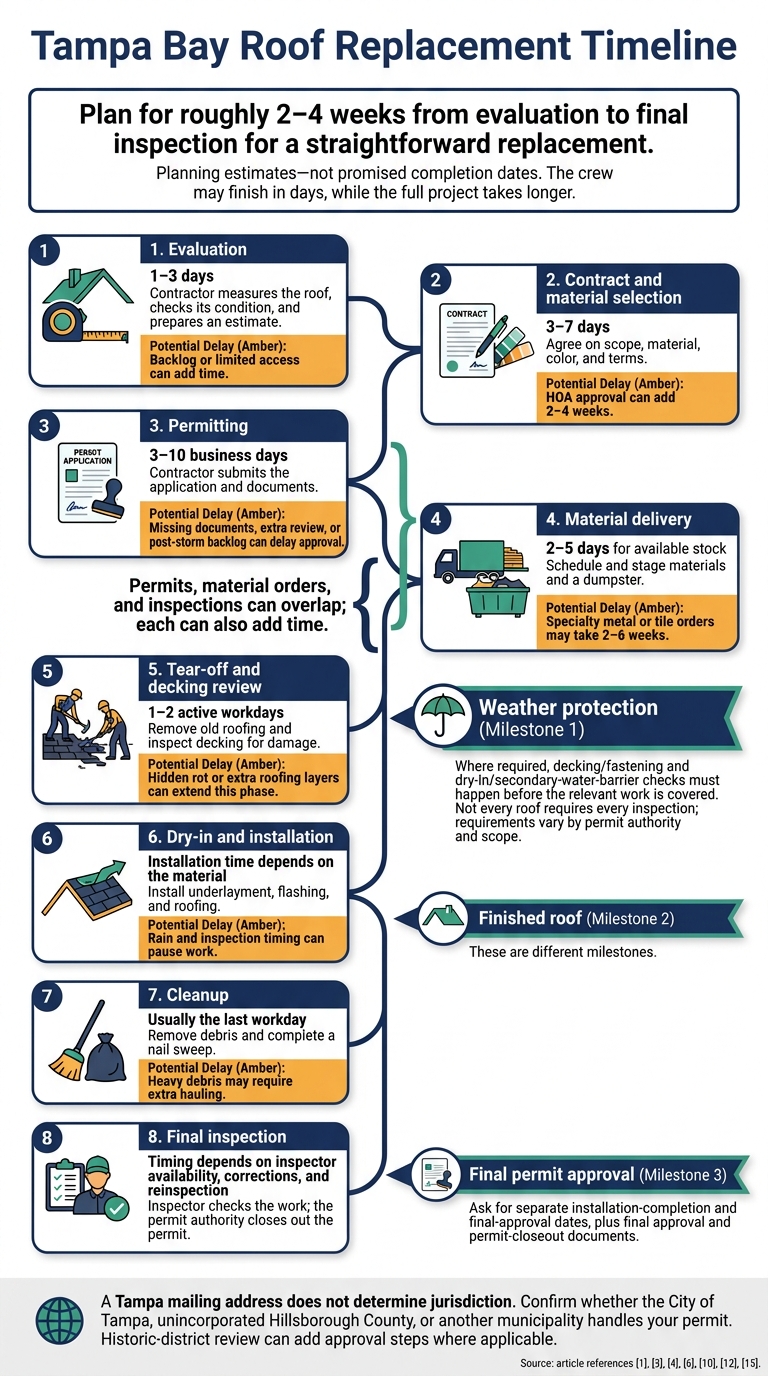
Tampa Bay Roof Replacement Timeline
Plan for roughly 2–4 weeks from evaluation to final inspection for a straightforward replacement. These ranges help you plan; they aren’t promised completion dates. Permits, material orders, and inspections can overlap, but each can add time.
The crew may finish in days. The full calendar usually runs longer.
| Phase | What happens | Planning allowance and possible delays |
|---|---|---|
| Evaluation | The contractor takes measurements, checks the roof’s condition, and prepares an estimate. | 1–3 days; backlog or limited access can add time. |
| Contract and material selection | You agree on scope, material, color, and terms. | 3–7 days; HOA approval can add 2–4 weeks. |
| Permitting | The contractor submits the application and documents. | 3–10 business days; missing documents, extra review, or post-storm backlog can delay approval. |
| Material delivery | The contractor schedules and stages materials and a dumpster. | 2–5 days for available stock; specialty metal or tile orders may take 2–6 weeks. |
| Tear-off and decking review | The crew removes old roofing and checks the decking for damage. | 1–2 active workdays; hidden rot or extra roofing layers can extend this phase. |
| Dry-in and installation | The crew installs underlayment, flashing, and roofing. | Installation time depends on the material; rain and inspection timing can pause work. |
| Cleanup | The crew removes debris and completes a nail sweep. | Usually the last workday; heavy debris may require extra hauling. |
| Final inspection | The inspector checks the work, and the permit authority closes out the permit. | Inspector availability, corrections, and reinspection can delay closeout. |
After scheduling comes permitting. Which authority handles it depends on your property’s location.
Your Property’s Location Determines the Permit Authority
A Tampa mailing address does not determine jurisdiction. Ask your contractor to confirm the permit authority before applying and check its current requirements.
- City of Tampa: Properties within city jurisdiction use Tampa’s Accela Citizen Access system for permit applications and status tracking.
- Unincorporated Hillsborough County: The county handles permitting, not the City of Tampa. Your contractor should confirm the submission and inspection procedures that apply.
- Other municipalities: Your property may fall under another municipality’s requirements. Historic-district review can add approval steps where applicable.
A finished roof doesn’t end the permit process. The work must still pass required inspections.
Required Inspections and Final Approval Are Separate Steps
Weather protection, a finished roof, and final permit approval are different milestones. Your contractor should identify and schedule required inspections, then keep the relevant work accessible until inspectors complete their checks.
Procedures vary by permit authority and scope. Not every roof requires every inspection.
- Decking or fastening checks: Where required, inspectors must check exposed sheathing, wood condition, and fastening before the crew covers them.
- Dry-in or secondary-water-barrier checks: Where required, the crew must leave underlayment and flashing accessible for inspection before installing the roof covering.
- Final approval: Your finished roof still needs the required final signoff. Ask for final approval and permit-closeout documents.
What Can Delay a Tampa Bay Roof Replacement?
Material timelines tell only part of the story. Once work begins, roof conditions can change how long installation takes, even with the same material. Roof layout, hidden damage, access, and thunderstorms can stretch the schedule.
Roof Size, Slope, and Access Affect Installation Time
Larger roofs require more labor hours. Steep slopes call for extra safety equipment and force crews to move more slowly. Multiple roof planes, valleys, dormers, skylights, chimneys, and vents also add cutting and flashing work.
Ask whether your estimate accounts for crew size, access, staging, and dumpster placement.
Hidden Decking Damage and Material Lead Times Add Delays
Crews may find hidden sheathing damage once they begin tear-off. Replacing rotted decking can add 2 to 8 hours, while extensive damage can add a full day or more.
Before work starts, confirm how you’ll approve repairs and delivery changes. Check that your full order has arrived, including flashing and custom parts.
Standard shingles often arrive within 1 to 5 days. Custom metal panels or tile selections can take 2 to 6 weeks.
Rain Can Turn Workdays Into a Longer Calendar Schedule
Weather can interrupt even a well-planned job. Wet surfaces, lightning, and approaching storms can pause tear-off, dry-in, and installation, leaving exposed decking at risk of moisture damage.
Hurricane season runs through November 30, so an October start still calls for weather monitoring.
Ask how your contractor uses local forecasts and radar to set start dates and daily work plans. A fixed “rain day” allowance won’t account for every weather interruption.
Confirm who handles temporary protection and how crews will secure exposed areas. Ask how you’ll receive schedule updates after a weather pause, since delays also affect noise, driveway access, and your daily routines.
Prepare Your Home for Noise and Worksite Access
Once you set the schedule, get your home ready for the workdays.
You usually do not need to move out. Expect loud daytime hammering, vibration, and possible delays from afternoon storms.
Before the crew arrives, confirm these preparations with your contractor so installation-day access stays clear:
- Vehicles and deliveries: Move your vehicles out of the driveway and garage before work starts. Confirm off-street parking away from the work zone.
- Valuables and fragile décor: Move outdoor valuables and fragile wall décor to safe spots. Remove fragile pictures, mirrors, and items on high shelves that vibration could dislodge.
- Children and pets: Keep your children and pets away from the work zone. Ask which entrance will stay open.
- Property access: Confirm the crew’s gate, attic, sprinkler, and landscaping access needs before work starts.
Once you settle access arrangements, put the job details in writing.
Confirm Work Dates and Responsibilities in Writing
Request a written schedule with separate installation and inspection milestones, not just one “completion” date. Include:
- Expected dates for delivery, the start of work, installation completion, cleanup, and final inspection.
- Daily work hours, driveway restrictions, and any attic or interior access the crew needs.
- One contact name and direct number for delays, weather-related changes, and updated dates.
- Who handles permits, inspections, overnight roof protection, debris removal, and final approval documents.
You may still need to provide access for the final inspection. Request final approval documents once the work passes.
Get a Project-Specific Timeline After a Roof Evaluation
Once you know your roof’s condition, convert crew days into calendar days. Your roof evaluation should confirm the area, slope, and complexity before you build that schedule.
Use these steps to turn the estimated on-site work into a calendar timeline:
- Set the baseline: Start with the earlier installation ranges for asphalt shingles, metal roofing, or tile.
- Adjust for roof size: Allow more crew days for a larger roof.
- Count overlapping phases once: When permitting and material ordering overlap, count only the longer wait.
- Add separate delays: Add inspection wait time separately, plus a weather buffer for Tampa Bay rain. Include only delays that don’t overlap.
Your estimate should account for overlaps among permitting, material delivery, and weather delays. Confirm whether the City of Tampa, Hillsborough County, or another permit authority handles your address.
Get a residential roofing evaluation from Bayshore Exteriors, and treat your schedule as an estimate rather than a fixed completion date.
FAQs
When is the best time to replace my roof in Tampa Bay?
The best time to replace your roof in Tampa Bay is November through April, during the dry season. These months bring less risk of rain delays.
Contractor demand typically drops outside peak hurricane season. That may help you book sooner and get a more predictable installation timeline.
However, don’t wait if your roof is failing. Heading into storm season with a damaged roof puts your home at greater risk than weather-related installation pauses.
What should I do if my roof replacement falls behind schedule?
Stay in touch with your contractor about what’s causing the delay and ask for regular progress updates. Common causes include hidden decking damage, permit backlogs, material shortages, and Tampa’s afternoon thunderstorms.
If weather delays the work, your contractor should protect your home with emergency tarps. These delays often fall outside the contractor’s control, so build extra time into your project timeline to set realistic expectations and reduce stress.
How can I verify that my roofing permit is closed?
Your roofing permit is closed once a city or county building inspector visits your property and approves the work as compliant with the Florida Building Code.
You can usually check your permit’s status through your local building department’s online portal. For example, check the City of Tampa’s portal or your county’s building services website.
Related Blog Posts
✔ START TODAY
Personal and targeted approach

✔ FAQ
Your Questions. Our Expertise.
How do I get an accurate price for my project?
Are you licensed and insured in Florida?
How long does a typical installation take?
Does your work come with a warranty?
Why do you recommend James Hardie siding for Florida?
What specific services do you provide?
✔ START TODAY
Ready to Get Started?
Trusted and reliable Hardie board siding services backed by expert craftsmanship and high performance materials. We help homeowners achieve a durable, low maintenance exterior that looks great and stands strong for years to come.
Book an Appointment
We have received your estimate request and will be reaching out to you shortly.
.webp)