Vinyl Siding Pros and Cons Explained
In Tampa Bay, vinyl's low cost faces faster fading, warping and storm failure—fiber cement lasts longer despite higher upfront price.
Lorem ipsum dolor sit amet, consectetur adipiscing elit. Suspendisse varius enim in eros elementum tristique. Duis cursus, mi quis viverra ornare, eros dolor interdum nulla, ut commodo diam libero vitae erat. Aenean faucibus nibh et justo cursus id rutrum lorem imperdiet. Nunc ut sem vitae risus tristique posuere.
If you live in Tampa Bay, vinyl siding costs less at the start, but James Hardie fiber cement usually holds up longer in heat, humidity, salt air, and hurricane winds.
For most homeowners, the tradeoff is plain: vinyl often runs $4 to $8 per sq. ft. installed, while James Hardie runs about $8 to $14. But Tampa Bay brings 74% to 90% humidity, about 54 inches of annual rain, and 140 mph design winds. That climate can push vinyl into fading, warping, seam failure, or blow-offs much sooner than many homeowners expect.
If you need the short answer, it’s this:
- Choose vinyl if your top goal is a lower upfront price.
- Choose James Hardie fiber cement if you want longer life, better storm performance, and stronger fire resistance.
- Pay close attention to permits, fastening, and Florida Product Approval, because siding installation affects how either system performs.
Vinyl Siding vs. FiberCement: Pros and Cons of Each
sbb-itb-85e0110
Quick Comparison
| Siding Type | Installed Cost | Typical Lifespan in Tampa Bay | Wind/Storm Performance | Moisture Performance | Fire Performance | Upkeep |
|---|---|---|---|---|---|---|
| Vinyl | $4 to $8/sq. ft. | 15 to 22 years | More likely to pull apart, separate at seams, or blow off | Can trap moisture behind panels | Can melt or warp under high heat | Low |
| James Hardie Fiber Cement | $8 to $14/sq. ft. | 30 to 50 years | Tested at 157+ mph | Handles humidity and wet conditions better | Noncombustible | Moderate |
Think lower price means lower total cost? Here’s what actually matters: how the siding performs on your house after years of sun, rain, salt air, and storm season.
Vinyl Siding Pros and Cons for Budget-Conscious Homeowners
In Tampa Bay, vinyl usually runs $3–$8 per sq. ft. installed. That puts it within reach for homeowners who need to balance siding work with a roof repair, new windows, or another big-ticket job. But the main issue isn't just price. It's whether those early savings still look good 12 or 15 years from now.
Lower Upfront Cost and Easy Maintenance Are Vinyl's Main Selling Points
If you're juggling several home exterior remodeling projects at once, vinyl's lower starting cost can make it hard to ignore. Installers can put it up faster than fiber cement because the panels weigh less, and that can trim labor costs too.
Once it's installed, upkeep stays light. You can usually clean it with soap and water, and you won't need to repaint it. For homeowners watching both the first bill and the long-term chore list, that's a strong selling point.
Heat, Wind, and Age Are Vinyl's Biggest Drawbacks
Think a 25-year product will give you 25 solid years in Tampa? That's not how this climate works. A vinyl product rated for 25 years in a milder Northern climate might show heavy wear on a Tampa home by year 12 or 15.
Tampa's UV exposure and steady heat do most of the damage. Panels can fade, chalk, warp, or buckle, especially if the installer didn't leave the right expansion gaps. South- and west-facing walls take the hardest hit because they sit under the strongest afternoon sun.
Wind is the other big problem. Hillsborough County sits in a state-designated Wind-Borne Debris Region (WBDR), and buildings must resist design wind speeds of 140 mph. Standard vinyl often struggles in those conditions.
During Hurricane Irma, a University of Florida study found high failure rates in vinyl siding, including on homes built under current code rules. Failures often started at the lowest panel course, then moved upward as wind pressure kept pulling at the siding.
Moisture and Fire Performance Are Two Risks Homeowners Often Overlook
Vinyl doesn't soak up water or rot. That sounds like a clear plus in a wet climate. But... the bigger issue sits behind the panels.
In Tampa Bay's 74%–90% relative humidity, a wall system with poor detailing can trap moisture behind the siding and damage the materials underneath. Or put another way: the panel may look fine while the wall behind it gets worse. On waterfront homes, salt air adds another problem by corroding the fasteners that hold the panels in place, which can loosen the system over time.
Fire performance gets less attention, but it matters. Vinyl is plastic-based, so high heat can soften it, melt it, or leave it misshapen. However, once fire reaches the outside wall, vinyl gives you little resistance compared with noncombustible cladding.
Why Tampa Bay's Climate Makes the Vinyl Siding Decision Harder
In South Tampa, salt air, humidity, and hurricane winds wear vinyl down faster. That’s where the choice gets tougher.
Humidity and Salt Air Put Extra Stress on Siding in South Tampa
Neighborhoods near the bay, like Davis Islands and Ballast Point, deal with salt air on a regular basis. That salt air speeds up the breakdown of paint and organic materials, and it can corrode the metal fasteners used in siding assemblies. On south- and west-facing walls, steady sun and salt air push that wear even faster.
Fiber cement handles those same conditions with more stability. It stays dimensionally stable through that exposure.
Hurricane Winds and Wind-Driven Rain Expose Vinyl's Weak Points
Think vinyl holds up the same in a storm zone? Here’s what happens in practice. In Hillsborough County’s 140 mph wind zone, vinyl can pull apart at seams or trim channels under that kind of pressure.
A University of Florida study reported high failure rates during Hurricane Irma. Florida Product Approval also depends on correct fastening, spacing, and installation depth.
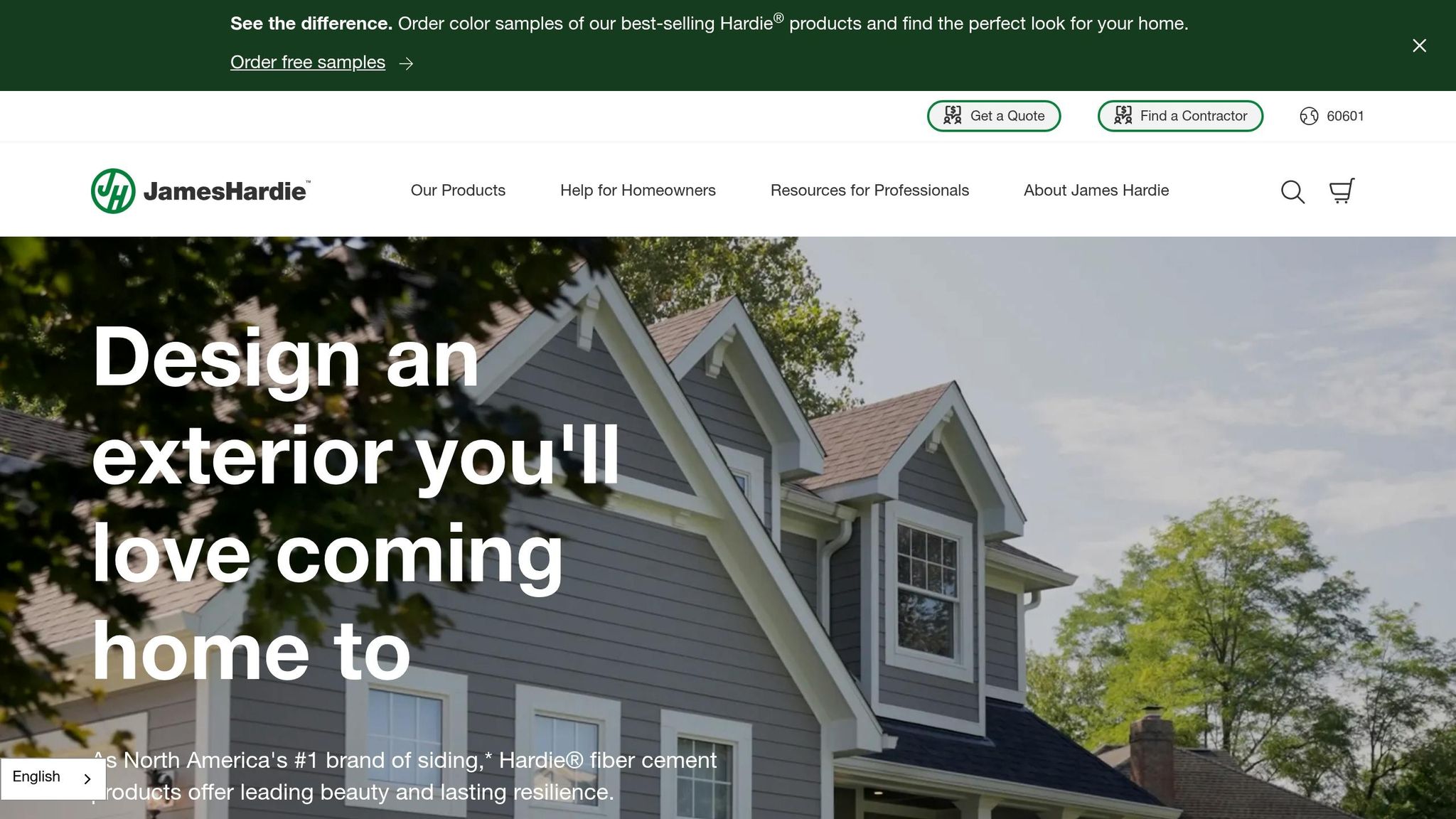
James Hardie HZ10 Is Built for Hot, Humid, Coastal Climates
That’s why James Hardie HZ10 makes more sense for Tampa Bay than vinyl. James Hardie designed HZ10 for Gulf Coast heat, humidity, and UV.
Unlike vinyl, fiber cement gives mold and algae little to grip. That matters in Tampa Bay, where relative humidity often runs from 74% to 90%.
It’s also tested to resist winds of 157 mph or more, which clears Hillsborough County’s 140 mph design requirement. FEMA also classifies fiber cement as a flood-resistant material.
Vinyl Siding vs. James Hardie Fiber Cement: Cost, Lifespan, Storm Resistance, and Fire Safety
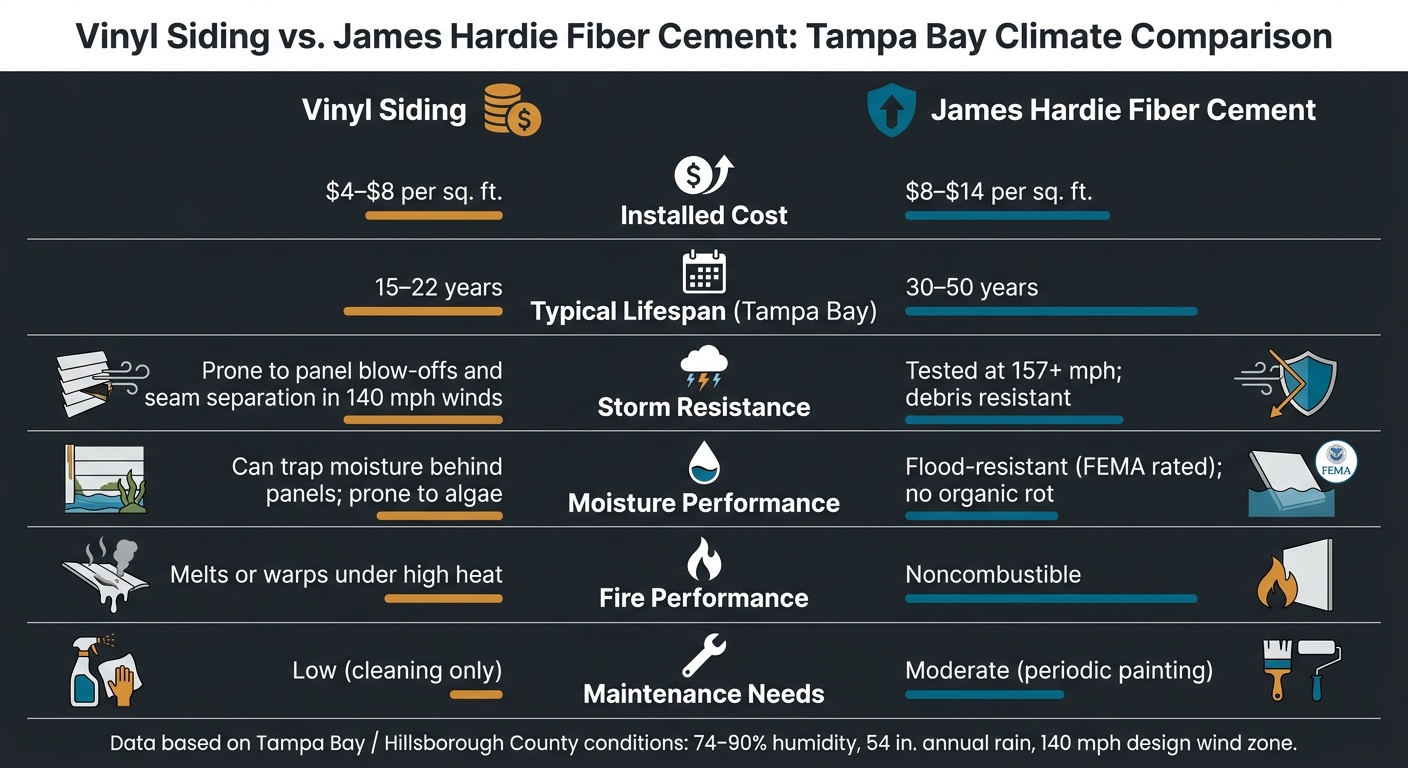
Vinyl Siding vs. James Hardie Fiber Cement: Tampa Bay Comparison
At a glance, these two options can look close. On a Tampa Bay home, they don't act the same.
The core choice comes down to this: pay less now with vinyl, or pay more upfront for longer service and better protection. Start with the quick comparison below, then dig into the details that matter most.
| Material | Installed Cost (USD per sq. ft.) | Typical Lifespan (Tampa Bay) | Storm Resistance | Moisture Resistance | Fire Performance | Maintenance Needs |
|---|---|---|---|---|---|---|
| Vinyl Siding | $4–$8 | 15–22 years | Prone to panel blow-offs and seam separation | Can trap moisture; prone to algae | Melts or warps under high heat | Low (cleaning only) |
| James Hardie Fiber Cement | $8–$14 | 30–50 years | 157+ mph rated; debris resistant | Flood-resistant; no organic rot | Noncombustible | Moderate (periodic painting) |
Vinyl Costs Less Upfront, but Fiber Cement Lasts Longer
The price difference is real. If your budget is tight, vinyl's lower starting cost will stand out.
But lifespan changes the math. Vinyl usually lasts 15 to 22 years before fading, chalking, or buckling pushes homeowners toward replacement. James Hardie siding styles like fiber cement have a more durable 30 to 50-year window under the same local conditions.
If you expect to stay in your home for more than 10 years, that higher upfront cost may feel less steep over time. In other words: you pay more at the start, but you may avoid replacing the siding as soon.
James Hardie Outperforms Vinyl in Moisture, Impact, and Fire Exposure
Think siding only needs to look good from the street? Here's what actually matters in Tampa Bay: moisture, wind, flying debris, and heat.
On moisture, James Hardie fiber cement holds a clear edge. FEMA rates it as flood-resistant, while vinyl can trap moisture behind panels and create conditions for algae growth.
Storm performance shows the same split. Fiber cement has independent testing at 157+ mph, which tops Hillsborough County's 140 mph design requirement. Vinyl, by contrast, is more likely to suffer seam separation and panel blow-offs under that kind of strain.
Fire exposure brings another sharp difference. Fiber cement is noncombustible, while vinyl can melt or warp when heat climbs.
That's the tradeoff Tampa Bay homeowners need to weigh most closely.
Conclusion: When Vinyl Works, When It Does Not, and How Bayshore Exteriors Can Help
Vinyl siding makes the most sense when your main goal is a lower upfront cost. It asks for little routine upkeep, and that matters if you're trying to keep the project budget in check.
But Tampa Bay is hard on vinyl compared to fiber cement. In South Tampa and Hillsborough County, heat, humidity, salt air, and hurricane winds can wear it down faster, which makes it a harder choice for homes that deal with those conditions year after year.
James Hardie fiber cement holds up better against moisture, storms, and fire exposure in Tampa Bay. You pay more at the start, but you usually avoid replacing it as often. In other words: you spend more now to deal with fewer siding problems later.
If fiber cement fits your home better, installation matters just as much as the product itself. Before the job starts, make sure the siding has a Florida Product Approval (FPA) number and that your contractor pulls the required Hillsborough County permit. Working with licensed fiber cement pros ensures these technical requirements are met.
That permit is not just paperwork. It triggers a required on-site inspection to confirm the installation matches the FPA-approved method. Bayshore Exteriors helps Tampa Bay homeowners plan, permit, install, and finish James Hardie siding when they want a better long-term fit.
FAQs
Is vinyl siding worth it in Tampa Bay?
Vinyl siding costs less at the start. But in Tampa Bay, it often takes a beating. Strong sun, high heat, and hurricane-force winds can make it brittle, warp the panels, or pull them loose.
Bayshore Exteriors points homeowners toward James Hardie fiber cement siding for better long-term protection. You’ll pay more upfront, but that added cost can make sense over time. Its 30- to 50-year lifespan and stronger performance make it a smarter long-term investment.
How much longer does James Hardie last?
James Hardie fiber cement siding usually lasts 30 to 50 years. Vinyl siding often lasts 20 to 40 years, and some homes need a replacement in as little as 15 to 25 years.
That gap matters in Tampa Bay. James Hardie tends to hold up better against the area’s humidity, salt air, and hurricane conditions. Vinyl, on the other hand, is more likely to warp, crack, or buckle when weather puts it under stress.
Do I need permits for new siding?
Whether you need a permit for new siding comes down to two things: your local building code and how much work the project involves. Some cities require a permit for full siding replacement but not for small repairs. Others treat nearly any exterior change as permit work, so it pays to check with your local building department before the crew starts.
Material choice matters too. In Florida’s humid, storm-prone climate, James Hardie fiber cement siding gives you more durability and better fire resistance than vinyl.
Related Blog Posts
✔ START TODAY
Personal and targeted approach

✔ FAQ
Your Questions. Our Expertise.
How do I get an accurate price for my project?
Are you licensed and insured in Florida?
How long does a typical installation take?
Does your work come with a warranty?
Why do you recommend James Hardie siding for Florida?
What specific services do you provide?
✔ START TODAY
Ready to Get Started?
Trusted and reliable Hardie board siding services backed by expert craftsmanship and high performance materials. We help homeowners achieve a durable, low maintenance exterior that looks great and stands strong for years to come.
Book an Appointment
We have received your estimate request and will be reaching out to you shortly.
.webp)